The Weird Guys (and Gals) of Martial Arts (Part 1): The Bad Weirdos

Let’s be real: martial arts attracts weirdos.

Not the charming, quirky ones who collect nunchucks and dad jokes. No. I’m talking about the ones who make you question whether martial arts really is for everyone. The ones who weaponize trauma, misunderstanding, or just plain ego—and turn every training session into a cringe-inducing experience.

You’ve seen them. You’ve probably rolled or sparred with them. And if you haven’t… brace yourself. They’re coming.

1. The Arcane Alchemist

He’s not here to train—he’s here to transcend.
This guy believes martial arts are primarily about channelling your chi, cleansing your aura, and aligning his bone marrow to the vibrational frequency of an eagle in flight. He doesn’t spar because it disrupts his energy field. He doesn’t drill technique because it’s too “external.” He’s here to talk about meridians and internal spirals and the time he knocked out a dude using only his breath.

Ask where he learned this, and it’s always a “secret lineage” or a reclusive master in the mountains who doesn’t believe in belts. Or hygiene.

He will leave as soon as he realizes your gym isn’t a temple, and no one wants to hear about his astral projections during hip escapes.


2. Mr. “I Wanna Learn UFC”

Not MMA. Not jiu jitsu. Not striking. UFC.

This guy watches knockouts on Instagram and thinks that’s the whole curriculum. He walks into your gym and immediately asks when you’ll be doing “cage work,” as if every community centre doubles as the UFC Apex Center. He doesn’t care about fundamentals. He just wants to jump into live sparring and “go full out.”

He’s always in a Tapout shirt from a garage sale, and his pre-workout smells like regret. You know he’s going to get armbarred, guillotined, and heel hooked within the free trial week, and when he quits, he’ll tell everyone the gym “wasn’t intense enough.”

Spoiler: It was too intense—for him.


3. The Thirsty Rash Guard Girl

Yes, women can be weird too. Equality.

She shows up to her first nogi class dressed like she’s on her way to a Coachella pool party.

Minimal clothing, maximum attention-seeking. She’s not here to train—she’s here to roll with the hottest upper belts in the room. Her triangle setups make no technical sense, but she still manages to add a bonus layer of unnecessary intimacy to an already intimate technique.

You want to be supportive, welcoming, and professional—but the vibes are weird. Real weird. She rotates through male training partners like profiles on a dating app, then disappears when she figures out they’re more into hitting the technique than hitting on her.

Her gi is always freshly washed. Her technique? Not so much.


4. The Pain Tourist

This guy doesn’t want to learn. He wants to survive a fictional prison riot.
Every technique has to be “real for the street.” He’s constantly asking what you’d do if the opponent had a knife, a gun, a rabid dog, or a rabid dog weilding a gun and a knife! You’re drilling guard retention, and he’s like, “What if he bites you?” He carries himself like someone who’s preparing for a post-apocalyptic bar fight, not an inter-academy tournament.

He doesn’t trust systems or fundamentals. But he does trust his own paranoid instincts, which mostly involve flinching and trying to fish-hook people.

He’s not here to grow—he’s here to indulge his fantasy of being Jason Bourne with anger issues.


5. The Chip-on-Their-Shoulder Grappler

You can spot them before the round even starts: clenched jaw, thousand-yard stare, already sweating.
This person is not here to train. They’re here to win—at all costs. Every roll is life or death. Every partner is a proxy for their ex, their childhood bully, or whoever told them they peaked in high school. You go to flow roll, and they go full championship final. You tap them, and suddenly they’re asking for “just one more round.”

There’s always an origin story. A divorce. A workplace humiliation. A teenage trauma they never unpacked. Jiu jitsu is their therapy—and unfortunately, you are the unpaid counsellor caught in their processing loop.

To be clear, martial arts can be therapeutic. But it’s not therapy. No matter how many sweaty meme pages say otherwise.


6. The Coach Who Only Cares About the “Good” Students

This one hits different—because this person is in charge.
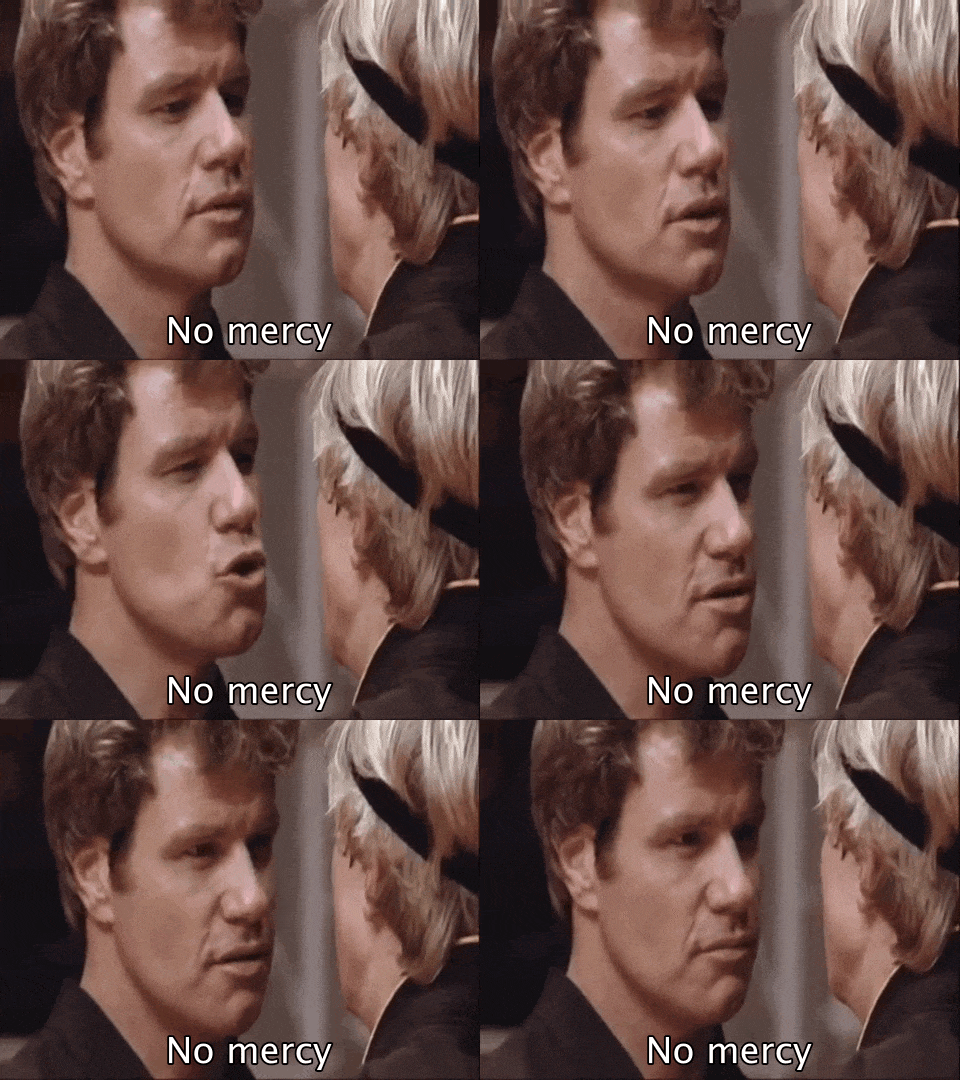
You notice it right away: there are favourites, and then there are invisible people. If you’re young, athletic, winning competitions, or just naturally gifted, you’re golden. The coach is watching your rolls, giving you corrections, shouting encouragement.

But if you’re older, slower, struggling with the basics, or just showing up to train consistently without fireworks? You’re background noise.

No corrections. No feedback. Just vibes. And not good ones.

What makes this extra weird is that martial arts is supposed to be for everyone. That’s the whole pitch. But some instructors treat the less “talented” students like grappling dummies—ideal to toss around, but generally ignored and left in the corner.

Meanwhile, they’re grooming their chosen few like a coach in an ’80s sports movie who peaked in college.

It’s a subtle kind of weirdness—but maybe the most corrosive of all. Because it tells people: You only matter if you win.

Spoiler: those “non-athletes”? They often end up being the toughest, most thoughtful, most dedicated students in the room. But they leave—because they know they’re not seen.


Final Thoughts

Martial arts is a magnet for misfits—and some of them are awesome. But the ones above? They’re not here to get better. They’re here to project something onto the mat: superiority, insecurity, fantasy, or trauma.

The trick is learning to spot them early, set boundaries, and focus on what you came for: growth, sweat, and maybe—just maybe—a good laugh at how weird we all are sometimes.

Next time: we talk about the good weirdos. The ones you love to have in the room, even if you can’t explain why.

Until then, keep your hands up, your mind sharp, and your vibe grounded.
Slipping, Bobbing, Weaving & Other Small Victories

There’s something quietly magical about the moment a skill stops being a practice and starts being instinct.

For me, that moment came mid-sparring — a flurry of punches flying toward my head — when instead of raising my guard or flinching into a block, I slipped, weaved, and rolled underneath like my body already knew what to do. No plan, no thought, no panic. Just movement.

It felt like discovering a new language I hadn’t realized I’d been learning.

The Karate Conundrum

Coming from a karate background, that kind of movement doesn’t come naturally. We’re trained to meet force with structure — to block, parry, and counter with perfect form.

For years, I trusted my arms to protect my head. That’s what we do — rising blocks, inside blocks, hard parries. But when I started training kickboxing and sparring with kickboxers, I realized how stationary that made me. I was always there to be hit.

I’ve been training kickboxing consistently for almost four years now, and that shift — from blocking to slipping — has been one of the most rewarding and humbling transitions of my martial arts life.

The Instinct Shift

At first, I had to think my way through head movement. “Slip left. Roll under. Come up on an angle.” It was clunky — too much brain, not enough body. I’d move late, move wrong, or weave directly into the punch I was trying to avoid.

But repetition is sneaky. You drill, you shadowbox, you get hit, you fix it. You do it all again, and again. Somewhere along the way, your body starts making the right choice before your brain gets a vote.

That’s what happened to me.

My sparring partner threw a sharp jab-cross, and instead of doing the “karate thing” — stiffen, block, or retreat — I moved. My head slipped off the centreline. My knees bent. My spine stayed relaxed. The punch missed, and I came back up balanced, ready to fire.


It wasn’t perfect. But it was instinctual.

And that was the win.

Celebrating the Quiet Wins

Progress in martial arts rarely announces itself. It doesn’t arrive with a fanfare or a belt test. It shows up in those quiet, spontaneous moments when your training takes over — when your body just knows.

That first time you weave under a hook without thinking? That’s a victory. When you stop fighting and start flowing. Another one.

We spend so much time chasing the big milestones — the new belt, the flawless technique, the knockout combo — that we forget how important these tiny, almost invisible shifts are. They’re the real markers of growth.

Beyond Blocking

I’ll always be grateful for my karate roots. They gave me structure, timing, and discipline — but kickboxing taught me how to breathe inside chaos. How to trust movement instead of tension. How to defend with fluidity instead of resistance.

When head movement becomes your first line of defence, everything changes. You start seeing punches differently — not as threats to be stopped, but as rhythms to be read. You stay calmer. You conserve energy. And, ironically, your old blocks and parries become sharper, because now they’re choices, not reflexes.

It’s not about abandoning karate; it’s about expanding it.

The Takeaway

If you’re reading this as a karateka hesitant to dip your head under a hook for fear of “bad form,” take this as your permission slip. Try it. Play with it. Laugh at yourself when it feels awkward. Then celebrate when it doesn’t.

Because the real art of martial arts isn’t perfection — it’s progress. And sometimes, progress looks like slipping a punch, smiling to yourself, and realizing that, for once, your head isn’t where it used to be.

Am I Worthy? The Quiet Doubt Behind Every Belt Promotion

I’m sure most of you know the feeling, even if you’ve never named it: impostor syndrome. That restless knot in your gut that says, Any minute now, they’ll realize I have no idea what I’m doing. It’s that quiet dread that your success, your skills, your rank—whatever you’ve worked for—might be built on sand.

Most people brush up against this feeling in their work. That promotion that looked shiny on paper but feels heavy on your shoulders. The job title that doesn’t match the voice in your head at 3 a.m.

For me, it’s always shown up the same way: right after a belt promotion. From the very first yellow belt that made my young heart race, to the stiff black belt that felt like it belonged on someone else’s waist, to every dan that followed, and—most recently—my purple belt in Brazilian Jiu-Jitsu.

Same question, every time: Am I worthy?


Martial Arts and the Myth of Arrival

If you’ve stuck around a dojo long enough to see the same four walls through a dozen belt colours, you know exactly what I mean. Most martial artists carry a quiet, constant discontent. A readiness to pick apart our own technique, doubt our worth, and measure ourselves against an impossible idea of “ready.”

And maybe that’s not such a bad thing. Because here’s the truth no one likes to say out loud: there’s no such thing as “arriving.” You don’t tie on a new belt and magically become the perfect version of yourself. The new rank isn’t a finish line—it’s a signpost that says: You’ve survived this far. Now here’s where it really gets interesting.

So maybe that self-doubt is just part of the contract. It’s the voice that keeps us honest. Keeps us hungry. Keeps us drilling the same arm bar for the thousandth time when the easier choice would be to coast.


Do You Trust Them?

Here’s the part we don’t like to admit. That voice—Am I worthy?—it isn’t just about you. It’s about who tied that belt around your waist.

At the end of the day, you pay for someone to teach you, watch you, push you—and judge when you’re ready to level up. They see the holes in your game that you’re blind to. They see the things you do right when you’re too busy obsessing over everything you do wrong.

If you trust your instructor, then trust the belt they gave you. If you don’t trust them—then you’re probably in the wrong dojo. It’s that simple.

Every time we second-guess our rank, we’re also second-guessing the person who handed it to us. And maybe that’s the part we should wrestle with harder than the question in our own heads.


What Your Doubt Means to Everyone Else

And then there’s everyone watching. The white belt you just drilled takedowns with. The kid staring up at your new belt, wondering how many years they’ll have to grind to get there too. The training partner who sees you as proof that all those hours on the mat actually lead somewhere.

A little humility is a good thing. Nobody likes the loudmouth blue belt who thinks they’re untouchable. But there’s a fine line between humility and disrespecting the path that got you here. If you keep brushing it off—I don’t deserve this, I’m not ready, they’re just being nice to me—you’re not just trashing your own work. You’re cheapening the process for everyone who wants to stand where you’re standing.

So wear it with the humility it demands—but also with the backbone to match. The belt is not a gold star. It’s a mirror. Live up to it.


So, Is It Useful?

Is this low hum of impostor syndrome useful? Sometimes. It’s the thing that keeps us drilling basics when ego tells us we’re too advanced. It’s the voice that says, Try again, when the lazy part of us says, Good enough.

But like any tool, it cuts both ways. Let it keep you sharp—don’t let it dull your spirit.

When you stand there, tying on that new belt with sweaty hands and that whisper in your ear—Am I worthy?—remember this: you probably wouldn’t feel that way if you weren’t the kind of person who cares enough to earn it again tomorrow.

That doubt is not your enemy. It’s the promise that you’ll keep showing up. Keep testing yourself. Keep stepping onto the mat to be proven wrong, proven right, proven human—again and again.


So let the whisper come. Let it circle you like a ghost. Then take a breath, bow in and roll anyway.

Because the only thing worse than being exposed… is never stepping up to be tested at all.

What Is Violence?

Violence is gross.

Violence is sticky.

Violence is intimate.

Violence is a solution.

Violence is a tool. 

Tim Larkin has a quote, which I’ve touched on before, “when violence is the answer, it’s the only answer.” 

Because violence is all these things, it is something that many people covet, and for those who study it, hold it and wield it with the utmost respect. 

When two or more people enter a violent encounter, they’ve entered a unique human relationship. And I think many, even those with martial arts experience, underestimate the intimacy, closeness and extremely gross nature of real violence. 

One such element is the fact that you may well be exposed to, ingest and be showered in human bodily fluids. Blood, sweat, piss, feces, tears, saliva – you can encounter one or more of these when interacting with violence. Movies only show a portion of these, while training may expose you to a few more. Those who have accidentally choked out a partner may know that when someone passes out, things release, and if you’re behind them, they’ll release on you. It’s sticky. It’s disgusting.

Violence is one of the few situations where you’ll be in the type of proximity with another person usually only reserved for romantic interactions and familial relationships. Intimacy is one of the key elements of violence and probably one of the reasons, I think, it’s so frightening. 

Violence has to be intimate. If you’re close enough to kiss, you’re close enough for a head butt. And just like love, it targets the most vulnerable parts of you. Intimacy targets your weakest parts.

This is why martial arts have such an emphasis on respect. Funakoshi said, “Karate begins and ends with respect.”

Every class, we enter into a violent relationship, but not true violence. It’s more like theatrical violence. It’s an act of play. You play one role while your partner plays another. “All the world’s a stage, all the men and women merely players.”

But if we don’t respect the roles we play, we can easily break the 4th wall into reality. Those who understand and respect violence know this. When we lose sight of playfulness in the dojo, we enter into the realm of real violence, which becomes increasingly intimate and gross.

But this playful nature can also land people in a complete fantasy world.

There are martial arts out there that avoid the ground, grappling, and closeness in general. If they claim to sell self-defence without integrating these aspects, they most certainly don’t understand violence.

I heard a story once of a traditional karate practitioner at a seminar that involved hand wrestling, and she said she wouldn’t participate because “she doesn’t like being grabbed.”

Do you know who cares less about your comfort level than you do? Everybody.


The unfortunate thing about violence is it doesn’t care about your comfort level for touch, and if you’re a target of it, you generally don’t have much say in the matter.

I’ve seen those with machismo claim that they could handle x-z violent situation, and I’ve watched chi-ball flinging nutcases say the same. Those who have experience in real violence and understand it aren’t usually too quick to throw judgement, make outrageous claims about beating others, or “wishing a guy would.”

Why? Because violence is literally one of the worst things imaginable, to be a victim of it and to be in a situation where one would need to use it.

Do you know the sound of the ligaments snapping beneath you?

Have you felt life leave someone’s body as their brain is denied oxygen by your hands?

Have you heard the howls of pain as bones are shattered by your intention?

Even worse, have you been on the receiving end of these?

No? Me either!

But, surviving soldiers of war will be the first to tell you how awful the reality violence is. When I spoke to my grandfather about WW2, he shook his head and said, “war is hell.”

As students of violence, we need to walk the middle path of it. We need to explore it at a depth that allows us to do so safely but also with just enough breath to not enter into the realm of bullshido.

Only those with extensive experience know how to create an atmosphere and culture that balances the play and realities of this unique and extremely human interaction. That’s why it takes so long to get a black belt, or at least, one that most acknowledge and respect.

To understand it, you need to both push and respect the boundaries of the theatrical violence we engage with within our gyms and dojos. And this symbiosis is easily disrupted with poor attitudes, bad intentions, and ignorance, easing us out of play into real violence or pushing us further into unreality. Both are unhealthy and lead to potentially dangerous and even deadly consequences.

So what are we to do as teachers and students of violence?

To replicate the intensity, we must pressure test.

But always with the concern and well-being of our partners.

And always with respect for the tool of violence for which wield.

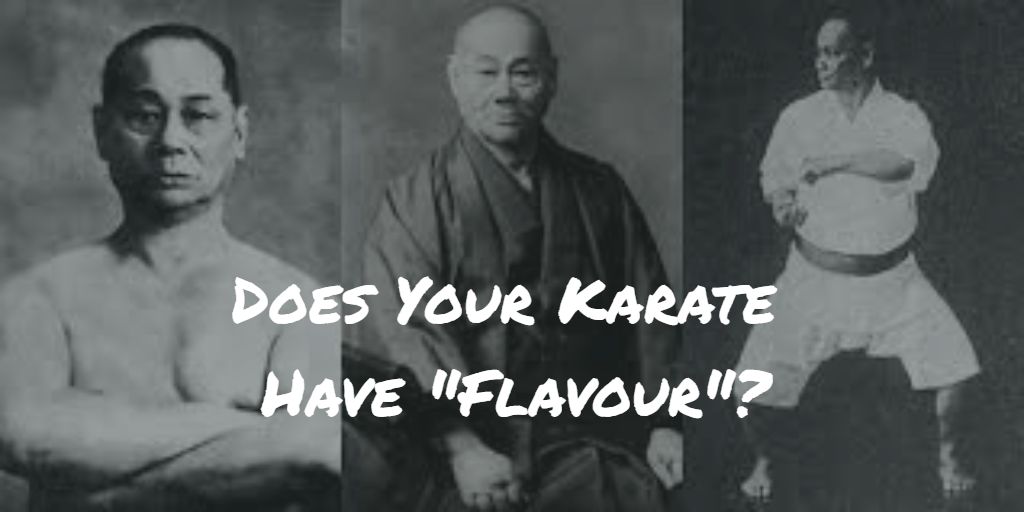
Enjoyed this blog? Check out Does Your Karate Have “Flavour”?!

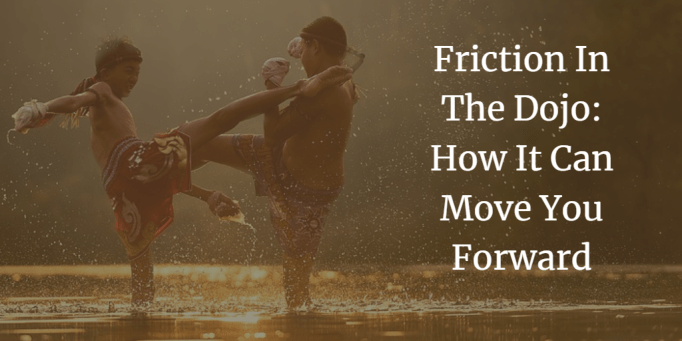
Friction in the Dojo: How It Can Move You Forward

Friction. . .

thomas-millot-316805-unsplash

It can be the thing that helps drive you forward. . .

It can be the thing that slows you down. . .

As yellow belts, my friend Tracy and I had a silent competition against each other.

Our Sensei told us that the only person we should compete against was ourselves.

“Os! Sensei!”

giphy1

In lip service, like so many still do, we professed to one another and our instructors that this was always our goal, to simply be better than we were the day before.

A selfish attempt to be more idyllic than the other.

When we stood next to each other in line, our eyes would always glance to the other.

Watching, sensing, checking. . .

giphy

“Is her horse stance lower than mine?”

“Did she do more push-ups than I?”

“Did the Sensei compliment her and not me?”

As these thoughts and insecurities arose in me, I later learned that she thought the same.

It was the unspoken friction that propelled us forward.

For everything she did well, I was committed to doing it. . .

better,

faster,

stronger,

than her.

And with that, Tracy would double her efforts in return.

In the presence of one another, our efforts were exponentiated. Our skill improved through the silent desire to be the best in the dojo, better than the other.

But. . .

One day, Tracy stopped attending classes. So, I was left  alone to to find another “Frienemy” to silently compete with.

As the years passed, there would be others. . .

Watching, sensing, checking. . .

Better, stronger, faster. . .

Wash, rinse, repeat. . .

giphy2

But, they would all eventually leave as well.

By the time I achieved my Shodan, there was no one left to compete with.

The Senpai above me were so far ahead, there was no competition there.

And, my students were not close enough yet to truly challenge me (although, I look forward to that day).

Without this traction, I could feel myself slowing down.

For the first time in my life, I had no one to compete with but myself.

giphy3

Where I once targeted my critical eye on those around me, I was now forced to point it at the one person I could neither defeat nor be defeated by: myself.

It was in that moment I understood what my Sensei was getting at when he said, “You should only compete with yourself.”

There is, of course, value in silently competing with those around you, as a type momentary motivation to challenge your physicality and fitness.

But, in the long run, you should define your success on your own terms. Each individual in the dojo has their own unique objectives. Sometimes people pursue martial arts for fitness, others for camaraderie, or just because they find it fascinating.

Would you want to compete against someone who is purely interested in the history of karate when your interest is biomechanics?

Of course not.

In this sense, it’s not so much about competing, but defining your unique objectives. Give yourself the recognition that you deserve. Observe the distance you’ve gone to achieve your goals. Have enough self-awareness to ask “Can I do better?” and to answer “I will do better”.

Now, when I step in line and look in the mirror, I sometimes see the gawky, awkward, teenage, yellow belt I once was and I wonder. . .

“Is her stance lower than mine?”

giphy4

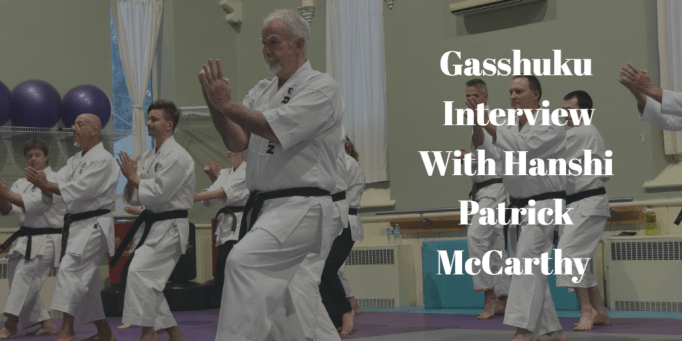
Gasshuku Interview With Hanshi Patrick McCarthy

With the 2018 Koryu Uchinadi North American Gasshuku just around the corner, I had a chance to speak with Hanshi Patrick McCarthy (9th Dan) about what the Gasshuku means to him and what we’ll be learning at this year’s event. 

JT: Can you tell me a bit about the meaning and history of the term Gasshuku?

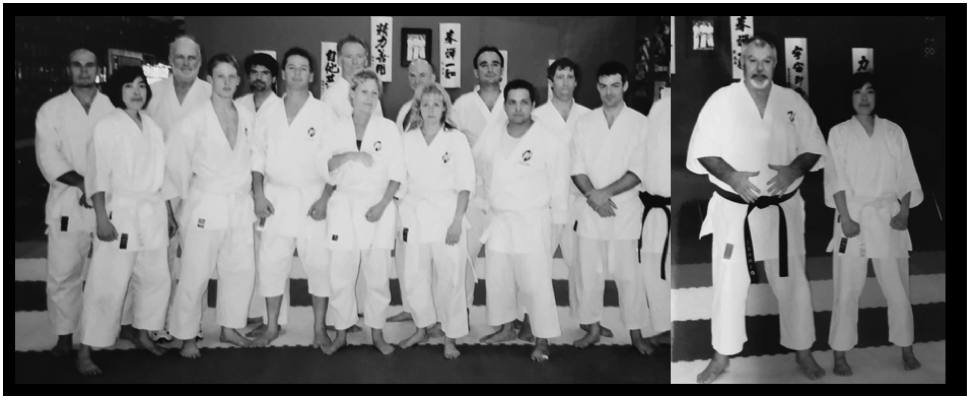
Koryu Uchinadi Gasshuku 2002

McCarthy Sensei: Unlike the Japanese terms Keiko[稽古], which means “training,” Renshu[練習], which means “practice,” Kan-geiko[寒稽古], which means training in [cold/winter] temperature/conditions and/or Shochu-geiko[暑中稽古], which means training in [summer/hot] temperature/conditions, the term Gasshuku[合宿] means “training camp,” but also brings the idea of lodging together while conjuring up a special feeling of camaraderie and learning through austerity. This, of course, coincides exactly with our theme for the international gathering: diligent training, improved understanding and camaraderie between like-minded people supporting common goals. Unlike the open or multi-style training seminars that I often teach around the world, the focus of our symposium is to address curriculum-orientated theory and practices. The express purpose of this effort is purely to broaden and deepen your understanding of Koryu Uchinadi and tighten our bond of friendship in the spirit of Budo.

JT: Can you tell me about the first Koryu Uchinadi North American Gasshuku? What was it like?

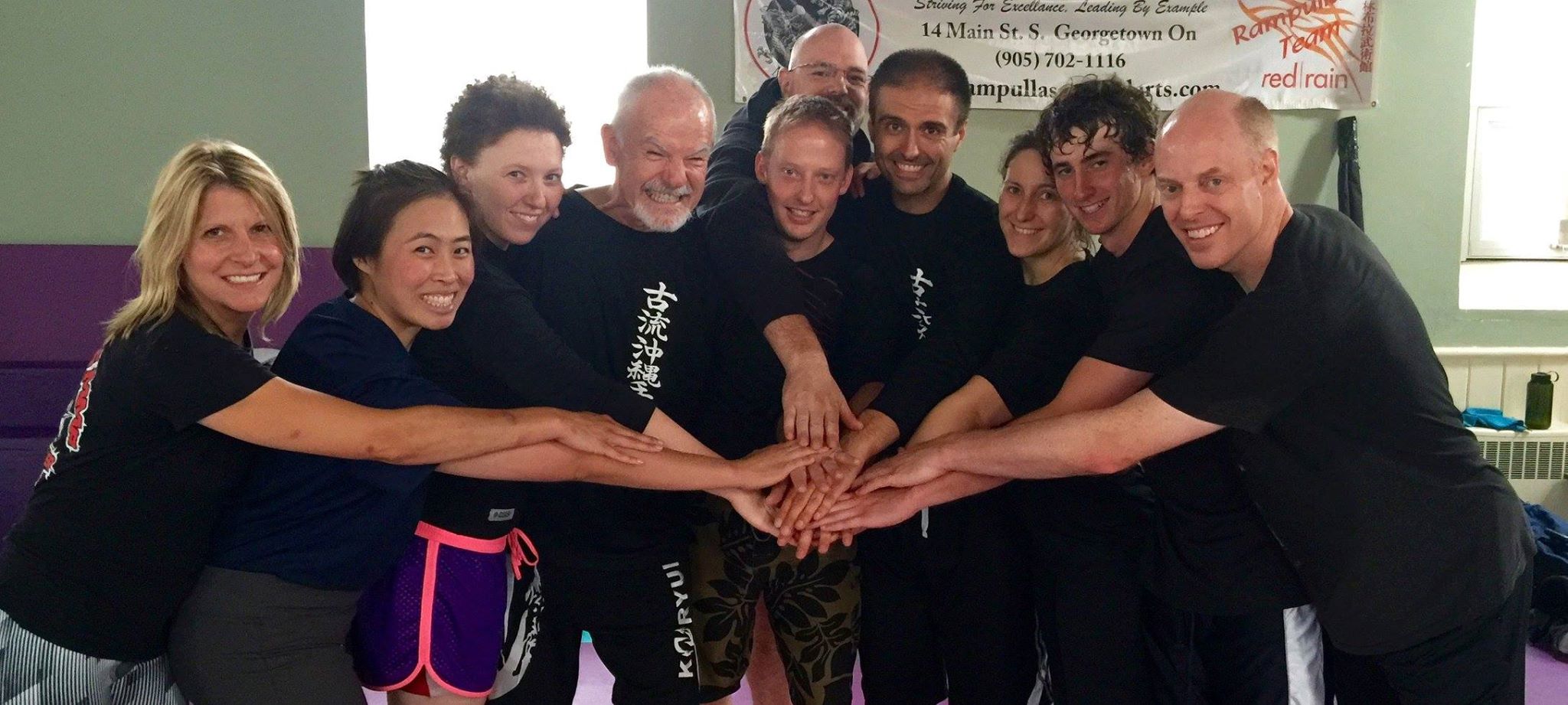
2002 Gasshuku

McCarthy Sensei:  Oh yes, the first two things that come to mind are what a remarkable job Sensei Brian & Helen Sakamoto did in arranging the gathering and exactly just how bloody hot it was in Toronto that summer of 2002.  I also remember the special guests who came to visit: Sensei Tsuruoka, Sensei Wally Slocki and Sensei Monty Guest. In spite of the hot weather, we had such a memorable time training together and forming such unshakable bonds of friendship.

JT: What is your favourite part about the Koryu Uchinadi North American Gasshuku?

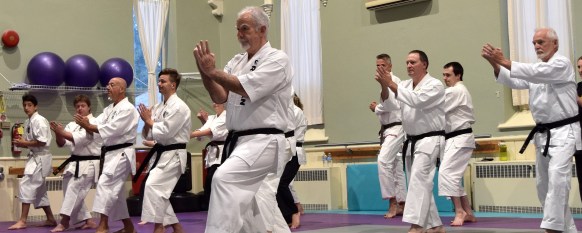
2015 Gasshuku Go KU

McCarthy Sensei:  Ahhh, that’s easy. Just the feeling I get of being around so many who share my dream and seeing how KU empowers those who embrace it.

JT: What do you plan on teaching at the 2018 Koryu Uchinadi North American Gasshuku?

12068936_979113705482798_7458521269342186251_o.jpg

McCarthy Sensei: Well, everything I teach is “Toolbox-orientated” [i.e. the ability to deploy effective practices against the HAPV] in what I refer to as Riai-Tegumi. That said, my focus of attention this year will be on the 48-Bubishi postures, how they are used against the HAPV, and their ritualization into templates, which are exampled in the Kata we embrace.

JT: Could you explain the significance of the 48-Bubishi Postures?

McCarthy Sensei: The 48 2-person postures represent classical HAPV and response applications. They are timeless and hugely significant to the original art as once taught, learned and practiced in old Okinawa.

JT: Could you explain Riai-Tegumi in a bit more detail, for those who are not familiar with this practice?

McCarthy Sensei: Riai-Tegumi[理合手組] is an unscripted/random exchange of HAPV attacks, escapes & counters [using our RRCCR/receive, respond, capture, control & release concept], with varying levels of aggressive resistance, which starts from a stand-up position after, “crossing hands,” and includes the clinch and the ground, and most preferably all three areas.

JT: If you had one piece of advice to give, what would it be?

dsc_0141

McCarthy Sensei: Don’t be afraid to believe in yourself, follow your heart and enjoy life!

Message from the Director

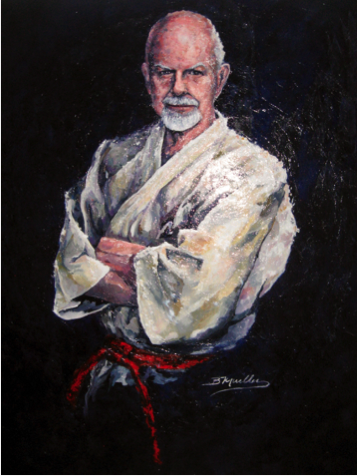
Sensei McCarthy

“Dear students, instructors & colleagues,

I have long been passionate about the traditional fighting arts but prefer functionality to impractical ritual. By going out on my own, and establishing Koryu UchinadiI not only challenged the existing status quo, I succeeded in ruffling many a feather within our tradition. Nowhere was this sentiment more evident than with the zealots who believe the art is the exclusive domain of the Japanese [i.e. Okinawans]. My knowledge of Japanese language and [Budo] culture, unique experience and technical competency represented the kind of progressive independence, which seemingly threatened the control and insecurity of the powers that be.

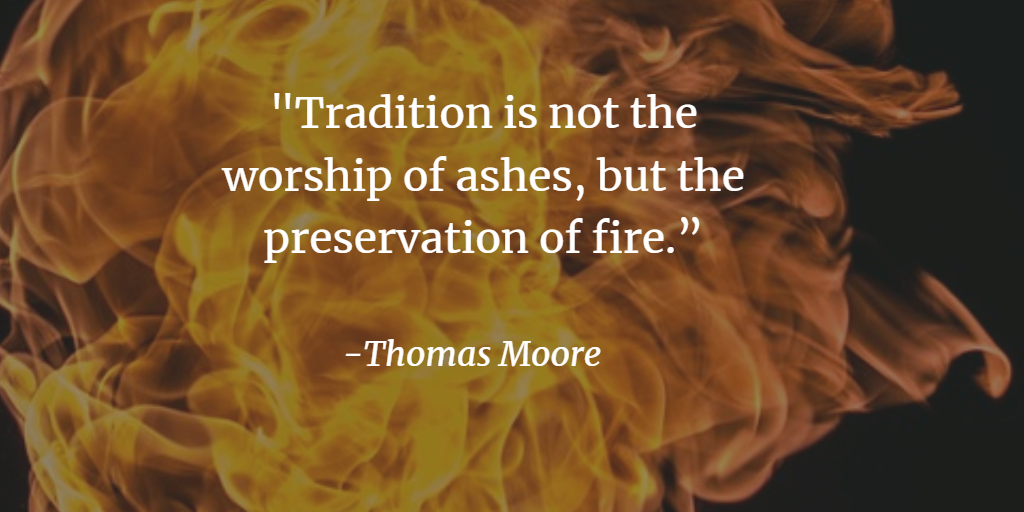
17th Century Haiku Master, Matsuo Basho, summed up tradition nicely when he wrote, “Seek not to [blindly] follow in the footsteps of the men of old but rather continue to seek out what they sought.” This timeless concept says so much about keeping tradition alive, rather than blindly adhering to, “Exactly how the master did it 75 years ago!” Citing the wisdom of Thomas Moore, “Tradition is not the worship of ashes, but the preservation of fire.” Progress is impossible without change, and those who cannot change their minds cannot change anything. The only way to do this effectively, especially in lieu of such widespread ambiguity, is the continual exploration of that which we don’t understand by using any and all means available to us. This is the guiding light of the IRKRS, and I am confident that the direction in which we are currently travelling is much more in line with the teachings left to us by the pioneers than is the conformist mentality that shaped the dysfunctional modern interpretation of this art.

pablo

Koryu Uchinadi represents the culmination of my life’s work. It is a uniquely contemporary tradition meticulously constructed from the remnants of four classical practices [Tegumi手組, Ti’gwa手小, Torite捕り手 & Kata型], once vigorously embraced during Okinawa’s old Ryukyu Kingdom Period. For many years, I dreamed of a way in which to reach out and help other people find their way through the historical, cultural and technical ambiguity, which tends to shroud understanding the essence of this art. The International Ryukyu Karate Research Society has become a worldwide movement bringing together like-minded people in pursuit of common goals. Celebrating empowerment, personal achievement and camaraderie has become the hallmark of our movement.

This Gasshuku is one of the most important annual gatherings of our organisation. To have such dedicated and like-minded people come together in camaraderie and support of common goals is nothing short of wonderful. I would also like to express my appreciation to all local participants and especially those who will travel from out-of-town, the USA and overseas. Some of the supporters here have been with us since our very first Gasshuku in 2002. I am especially grateful to Sensei Helen Sakamoto for her years of unwavering support. I’d also like to say thanks to Renshi Mike Coombes, his team, and the entire Toronto Study Group who do such a great job co-hosting our gathering. Also, a very special thanks to our co-instructors [Renshi Paul Lopresti, Renshi Cody Stewart, & Shidoin Darrin Johnson] for agreeing to deliver our target lessons this year. I am confident that you will be very happy with the experience delivered through their insightful lessons.

Welcome to our 16th annual North American Gasshuku, thank you for sharing my dream and helping to make this annual gathering such a wonderful learning experience.

Patrick McCarthy

Director

Join us for the 2018 Koryu Uchinadi North American Gasshuku!

KU_IRKRS-3

Martial Arts & Swimming Alone

As a child, I was afraid of swimming in open water by myself; the vastness frightened me.

183499_4379613567_5589_n

I was afraid that the weed that tickled my feet would be the thing that pulled me under.

jong-marshes-458354-unsplash

I was afraid that if I turned away from the endless horizon that the shore that once harbored me would be gone.

I was afraid with no one there beside me I would slowly sink into the abyss, no one to hear my cries for help, no one to help me re-emerge.

Martial Arts And Swimming Alone Reach

For many, the martial arts generate this same fear.

You could spend a lifetime exploring its depths and never fully understand it all. There is SO much to learn; the knowledge is vast. It’s easy to feel insignificant, treading water, struggling to keep your head above water against its swells.

There are many who have changed styles of martial arts because of one reason or another. Perhaps the politics and drama was too much, you outgrew your teacher’s skill, or you just didn’t see its value anymore. In these moments, you must turn away from the shore, the place from which you came—often with uncertainty—and swim towards a new horizon.

In each of our dojos, we have to fight through the metaphorical weeds: an impatient student, an overbearing mother, a self-absorbed instructor. At first, these things can seem like a threat, but the energy lost trying to avoid these weeds can be better spent by simply swimming forwards.

When you enter these open waters you can jump feet first, or you can dive right in.

But, when you do, remember . . .

No matter the distance between you and the shore, it will always be there to harbor you.

tim-easley-318211-unsplash.jpg

No matter the depth of the abyss, there will always be a hand to reach to.

And, no matter the weed that tickles your feet, it will never break the surface.

But once you face this vast ocean on your own and swim further away from your shore, you’ll realize that all those who walk the path also swim the same ocean and reach for the same horizon.

But know now, the rewards that lie on the horizon just beyond your reach and your fear…

Will. Be. Glorious.

laib-khaled-324459-unsplash.jpg

Thanks for reading!

As a token of appreciation, you get 10% off at Submission Shark! Promo Code: THEMARTIALARTSMUSE

10% Off

Join us for the 2018 Koryu Uchinadi North American Gasshuku in Beautiful Cobourg, Ontario! Click here to learn more!

KU_IRKRS-3


The Road Less Travelled Is Not Always A Road

“There are many paths to the top of the mountain. . .”

eberhard-grossgasteiger-338314

One night, I had a dream that I slid down a mountain and I was about to fall into the ocean. Before I hit the water, I caught onto something and started to climb back up. At this point, there were other people around me—most of which were people I loved and respected—and they were climbing faster than me and with bigger loads on their back; some were even carrying other people as they climbed upwards.  I was constantly losing my footing and slipping; I was afraid to fall, anxious to get to the top and frustrated that everyone else was doing better than me.

eberhard-grossgasteiger-424816.jpg

Then, I noticed a river flowing down the mountain beside me and a long time friend said to me, “Let’s swim up, it’s easier that way.” He jumped into the river and swam up, reaching the top before anyone else.

nathan-anderson-135242

I was afraid to follow because the current flowed downwards, but because I trusted him so much, I jumped in anyway and began to swim. I wasn’t sure in what style to swim in, because my friend reached the top with front stroke, I tried his way, but I went further down. So I started swimming doggie paddle; still didn’t work. Then, I went with breast stroke and found that I reached the top before everyone else.

ales-krivec-37519

Although unorthodox, I realized that by jumping into the river, I didn’t have to be afraid of falling anymore, because one cannot fall while in water. And even though I had to fight the current in the river, it was easier to flow upwards than if I had followed the methods of the people around me and I need not compete with them, because it is only through my own technique that I may reach the top of the mountain.

neven-krcmarek-175845

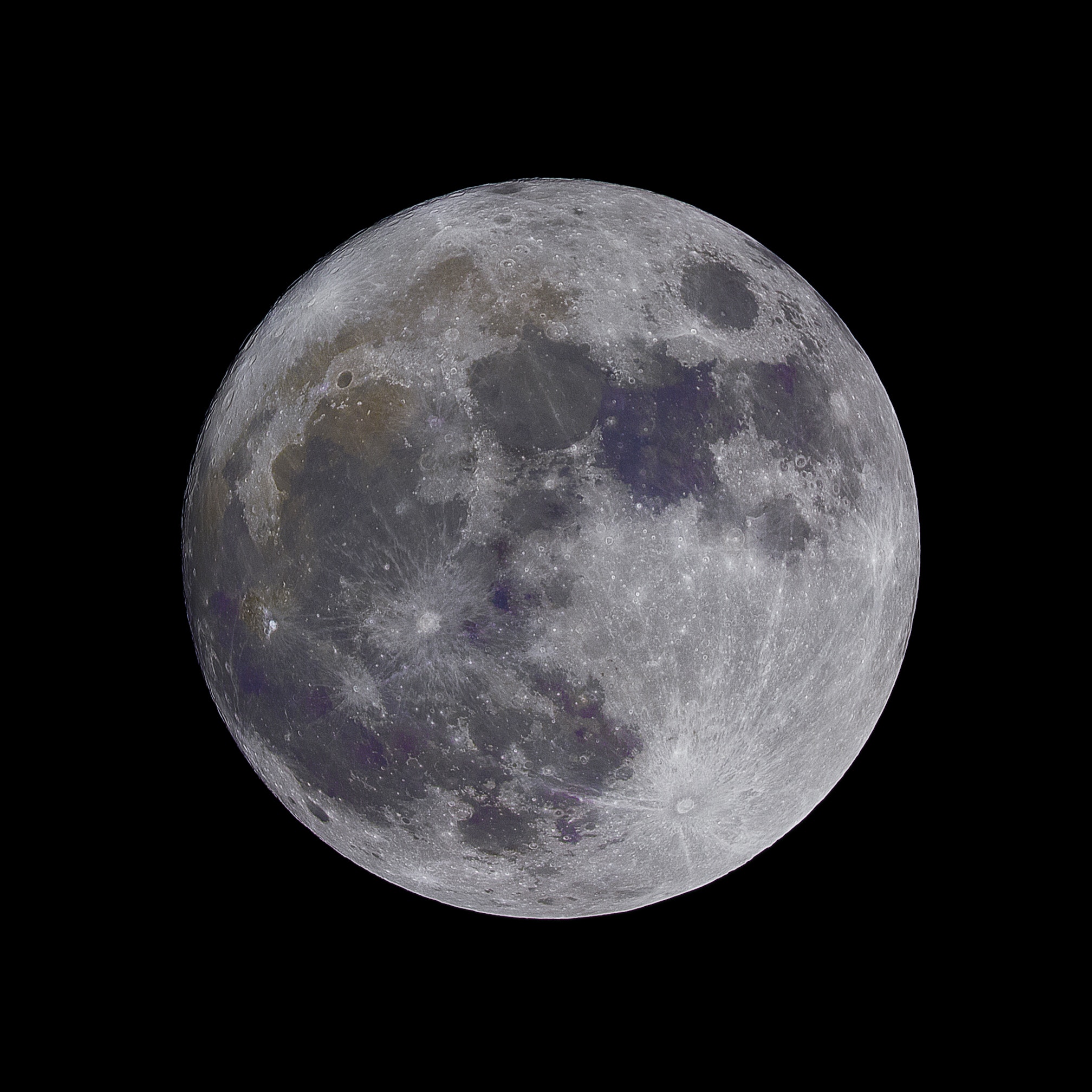
“. . .But there is only one moon to be seen for those who achieve its summit.”- Chinese Proverb

9 Stupid Reasons to Be In the Dojo. . .And, The 1 Good Reason YOU SHOULD!

Have you ever met someone in your dojo who just doesn’t get it!?

giphy8

The student (and sometimes teacher) who will do martial arts for every reason under the sun, except for the reason they should!

The reason that will give them the best results. . .

The reason that will give them the greatest satisfaction. . .

So here are some of the ignorant, the creepy and at times downright stupid “reasons” to train I’ve seen over the years from students and teacher alike, and the simple answer I have for all of them.

1) When your Mom drops you off and you don’t want to be there. . .

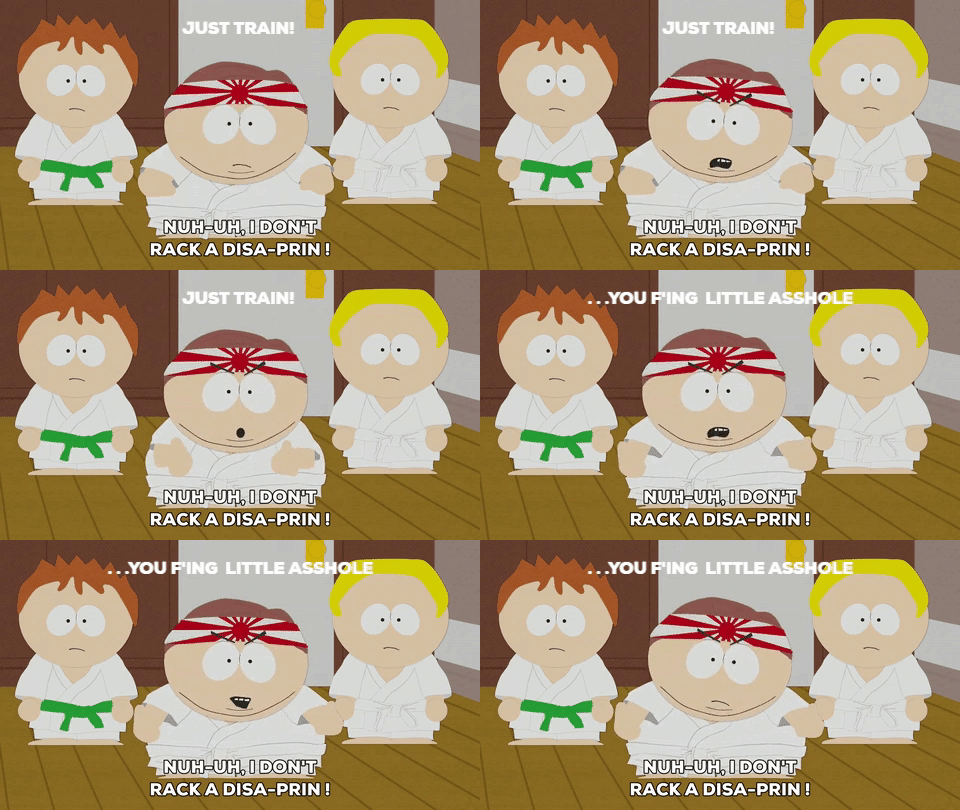
JUST TRAIN!

giphy9

2) When you’re trying to escape your personal problems. . .

JUST TRAIN!giphy4

3) When you want a way to flirt with the girls in the dojo behind your wife’s back. . .

That’s creepy! Stop it! JUST TRAIN!

giphy5

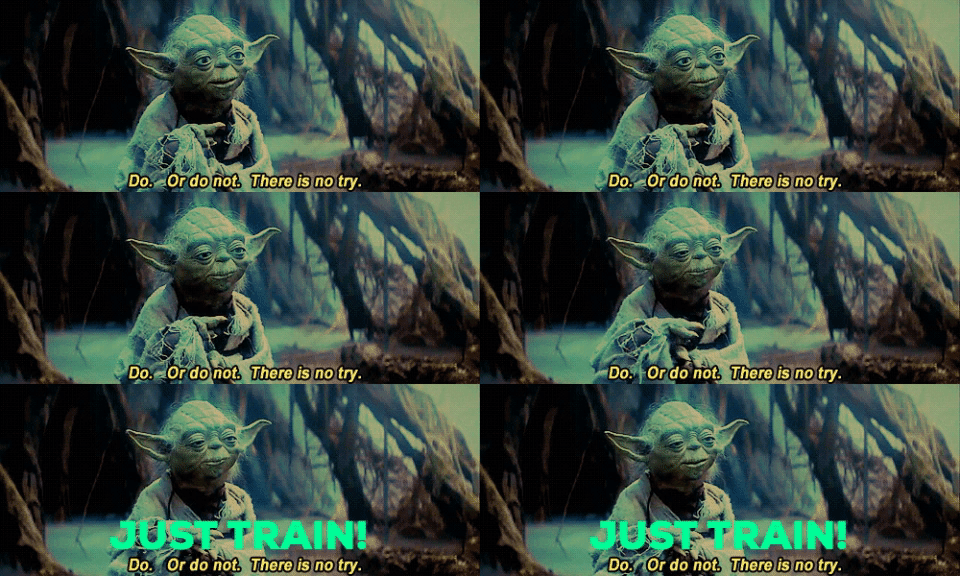
4) When you want to believe training will make you a Jedi. . .

Do or Do not. . . JUST TRAIN!

giphy3

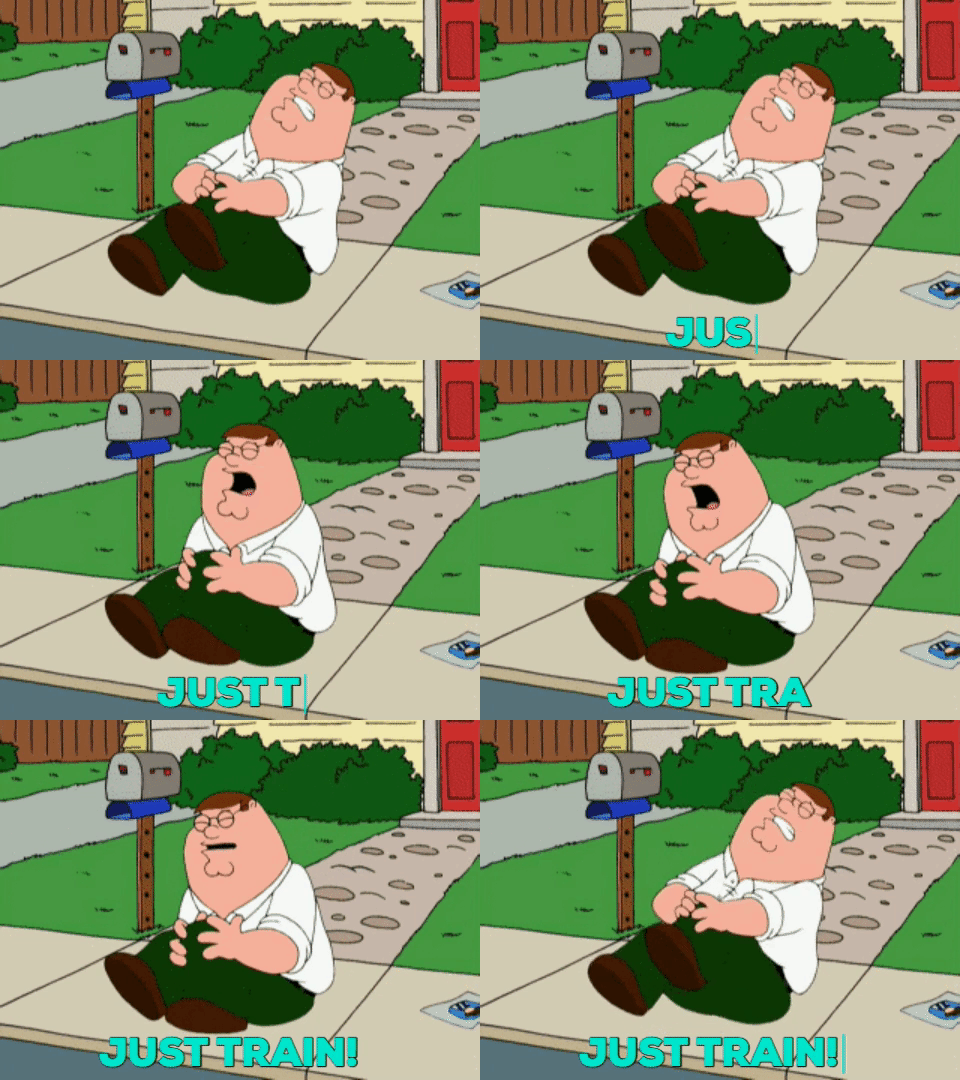
5) When you  fake an injury just to get attention. . .

JUST TRAIN!

giphy1

6) When you have a crush on the Sensei. . .

Ugh. . .Grow up! JUST TRAIN!

giphy2

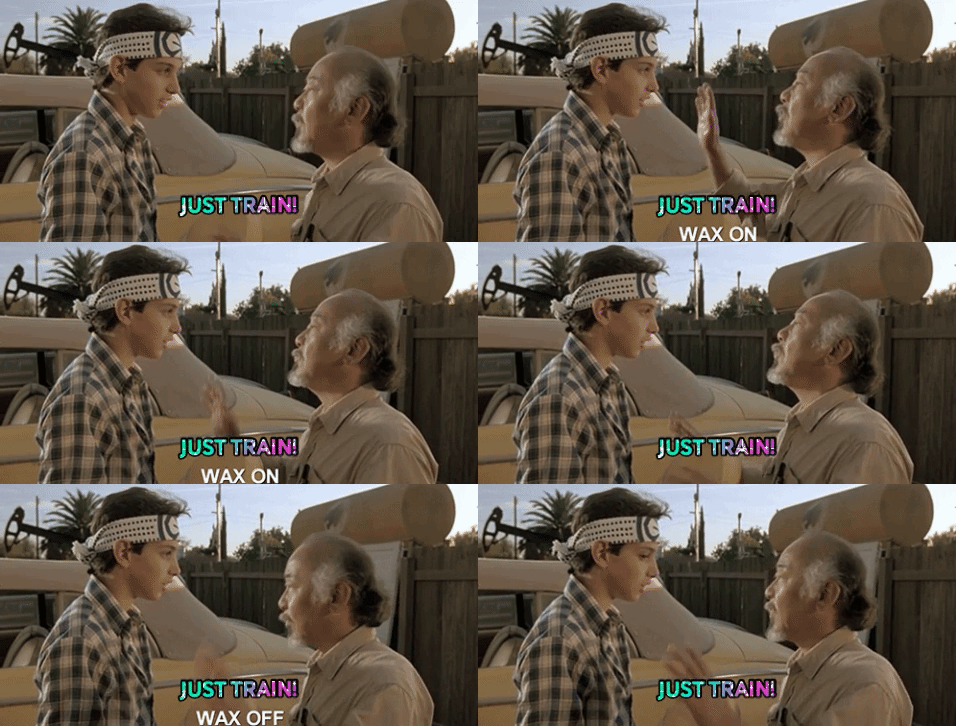
7) When you want to be the next Karate Kid. . .

Wax on. Wax off. JUST TRAIN!

giphy6

8) When you’re looking for a father figure. . .

Get therapy! JUST TRAIN!

giphy7

Well, maybe not therapy from him. . . 

9) When you want your next belt. . .

JUST TRAIN!

giphy

10) When you want to be a respected martial artist. . .

That seems legitimate. . .JUST TRAIN!

giphy10

“JUST TRAIN!” It’s Chuck Norris APPROVED!

When you enter the dojo, there’s only one reason and one reason only to be in that room.

So, Shut up!

JUST TRAIN!

output_upcTv5

You Invested In The Wrong One. . .

You know the one. . .

A Student

A student who showed so much promise. . .

With the ability to pick up movements with ease and grace,

An ability to strike and kick as if it was second nature, leaving you with the feeling you have found a prodigy.

You know the one. . .

A Teacher

A teacher who showed so much promise. . .

With skill and knowledge so far beyond your own.

A paradoxical ability to challenge and encourage you, leaving you with the feeling you’d be lost without them.

But then. . .

Something happens. . .

The masquerade ends. . .

And, something dark deep down seeps out from beyond their mask.

They are not what we hoped them to be. They never were.

You know the one. . .

A Student

A student who speaks wrongly behind your back

With the natural ability to lie and deceive;

A prodigy with the cloak and dagger.

You know the one. . .

A Teacher

A teacher who lacks moral stamina.

The ability to choose vice over virtue.

They submit to nothing, except their own temptations.

But perhaps the mask they once wore was not one of their choosing

It is a mask we projected.

We were so desperate to grasp at the hybrid of elegance and ugliness that we put what we desired most in the forefront only to watch it dissolve away, leaving you with this empty feeling. . .

You invested in the wrong one.

Post Script:

No matter the reason—whether it was simply a talented student who went off to university, a teacher who started teaching “chi- balls,” or something far more insidious—being disappointed by someone in whom you’ve made the careful decision to invest your time, energy and, dare I say, love is never easy. But, as the Buddha says, “all things are impermanent” and as that emptiness passes, you’ll find that in its place friendships with more dedicated students and respectable teachers will blossom far greater than the void that was left. Those are the people worth investing in.