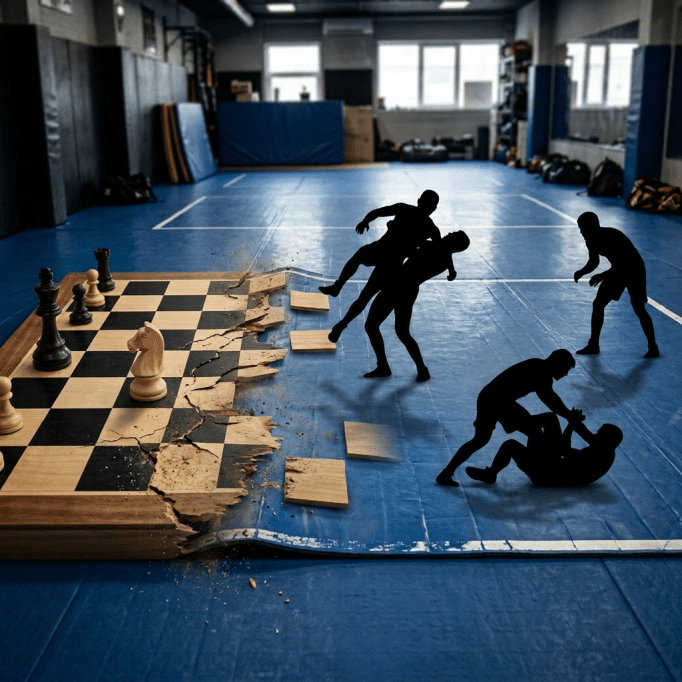
Chess board breaking and transitioning into grappling mat with black silhouettes of wrestlers grappling

Eco-BJJ Explained: Benefits and Limitations of the Approach

There’s always a new martial arts trend rolling onto the mats like it invented jiu-jitsu last Tuesday. Usually, it comes with a few buzzwords, a few takedowns on “outdated” training, and a strong whiff of condescension for anyone who doesn’t immediately bow to its superiority.

Enter Eco-BJJ, also known as the ecological or constraint-led approach. If you’ve ever heard someone say “we don’t teach techniques here, we build natural grapplers,” congrats—you’ve met the movement.

Now, if you’re picturing students running around like kids on a playground while the coach mumbles something about “task-based learning,” you’re not entirely wrong.

But you’re also missing the point.

Let’s break it down.


🌱 What Even Is Eco-BJJ?

At its core, Eco-BJJ is the art of designing environments rather than dictating steps.

Instead of drilling armbar setups from closed guard for twenty minutes, your coach might just say: “Top player, pass the guard. Bottom player, sweep or submit. Go.”

That’s it. No technical walkthrough. No lecture. Just chaos.

Glorious, sweaty chaos!

This style of training emphasizes problem-solving through movement. You’re not memorizing—you’re discovering. Like a toddler learning to walk… if that toddler were being leg-locked by a purple belt.

The goal is to create grapplers who don’t just know techniques—they feel them. Under pressure. With resistance. Without needing to be spoon-fed every step.


🧠 Grappling Without the Flashcards

One of the biggest perks? Eco-BJJ builds intuitive fighters.

These are the students who couldn’t name a single guard variation if their life depended on it, but can shut down your game mid-roll like they downloaded it in real time.

They may not know the terminology. But they’ve lived the movement over and over again in real, messy scenarios. That kind of fluency can’t be faked.

It’s the difference between memorizing a speech and knowing how to talk your way out of a bar fight.

And honestly, some people light up in this setting. Athletes. Kinesthetic learners. Folks with short attention spans and fast reaction times. It can feel like coming home.

But—cue the record scratch—it doesn’t work for everyone.


🥵 The Dark Side of “Just Figure It Out”

If you’re not naturally athletic… if movement doesn’t come easy to you… if you like learning with a bit of structure—this method can feel like being thrown into the ocean with the instructions, “Just feel the water.”

Spoiler: not everyone floats.

Eco-BJJ tends to reward the naturally gifted—the wrestlers, the gymnasts, the folks whose spatial awareness is dialled in. But students who need clarity, repetition, and verbal guidance? They can feel overwhelmed or even left behind.

Which brings us to a less-sexy truth…


👎 Intuition ≠ Instruction

One of the under-discussed downsides of Eco-BJJ is that it doesn’t always produce good teachers.

Just because someone can do something instinctively doesn’t mean they can explain why it works—or how to help someone else get there.

When your understanding is rooted in feel rather than formal knowledge, it can be hard to reverse-engineer your success for someone who doesn’t move like you.

It’s the same reason great athletes don’t always make great coaches. They knew the answer with their bodies, but they never had to put it into words.

If we’re trying to build a generation of confident instructors—not just clever grapplers—there still has to be room for explicit teaching, structured learning, and yes… actual technique.


🤷‍♀️ Is Eco-BJJ New? Or Just Good Coaching With a Trendy Name?

Here’s the kicker: many of the best coaches have been using ecological methods for years… they just didn’t need to rebrand it.

Any time you’ve done situational sparring, grip fighting with limited tools, or positional games, you were already dabbling in constraint-led training.
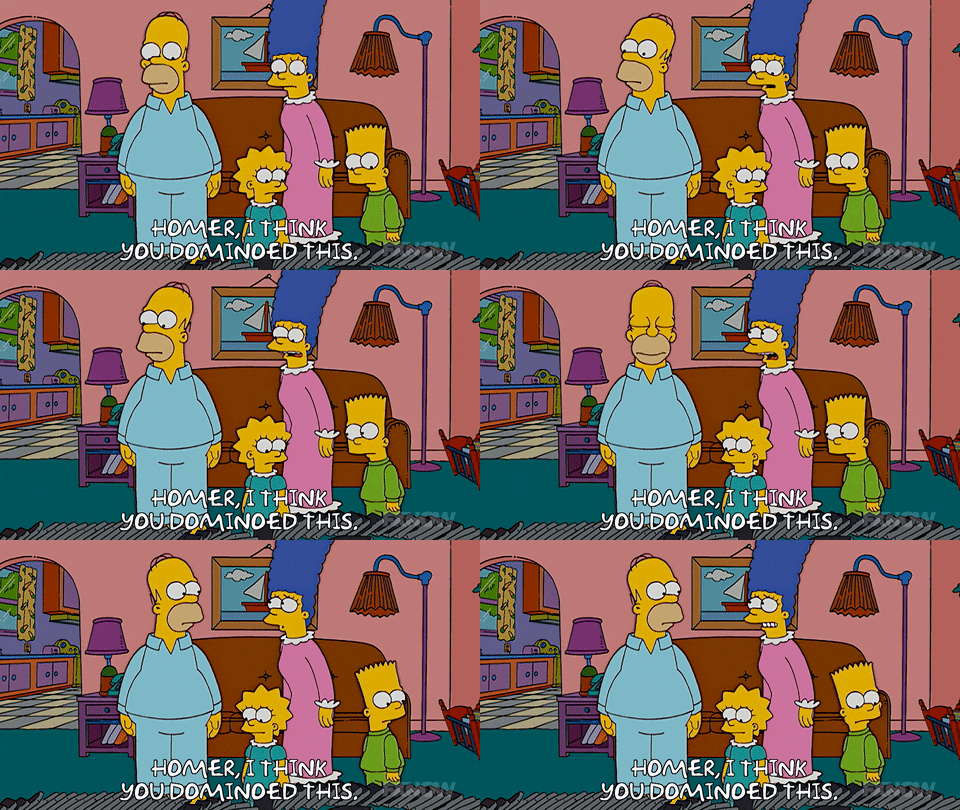
What’s different now is the packaging, the jargon, and sometimes the cult-like belief that this is the One True Way.

Newsflash: it’s not.

And that’s okay.

Like anything else in martial arts, Eco-BJJ is a tool. Powerful? Absolutely. All-encompassing? Not even close.


🧩 So Who’s It For?

Eco-BJJ is brilliant for developing timing, creativity, and adaptability under stress. It’s messy, organic, and honest.

But it’s not a one-size-fits-all solution. Beginners need structure. Some people need repetition. And not every coach is equipped to design learning games that lead somewhere productive.

Use it. Blend it. But don’t worship it.

Because at the end of the day, the job isn’t to teach students to win games—it’s to help them understand why they won.


💬 Final Thoughts from the Muse

Eco-BJJ is a refreshing shift away from cookie-cutter techniques and endless drilling. It teaches grapplers to think, adapt, and move intuitively—which is a massive gift in a live roll.

But like any shiny new methodology, it comes with blind spots.

It can leave less athletic students behind. It can build athletes who can’t teach. And it can make you think you’ve discovered something revolutionary when really… You just renamed sparring.
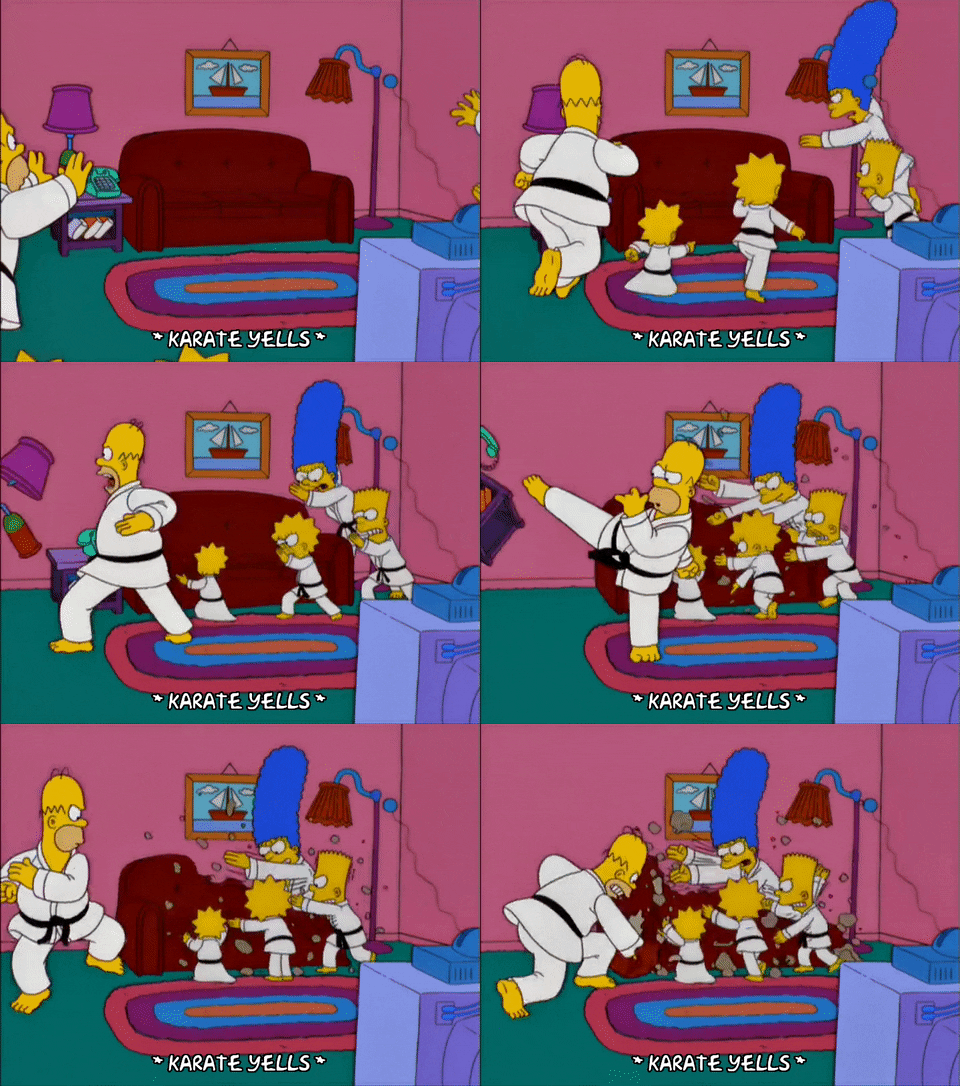
If you’re a coach, use ecological games. But also teach techniques. Help your students name what they’re doing and why it works. Build movers, yes—but also build thinkers, communicators, and future instructors.
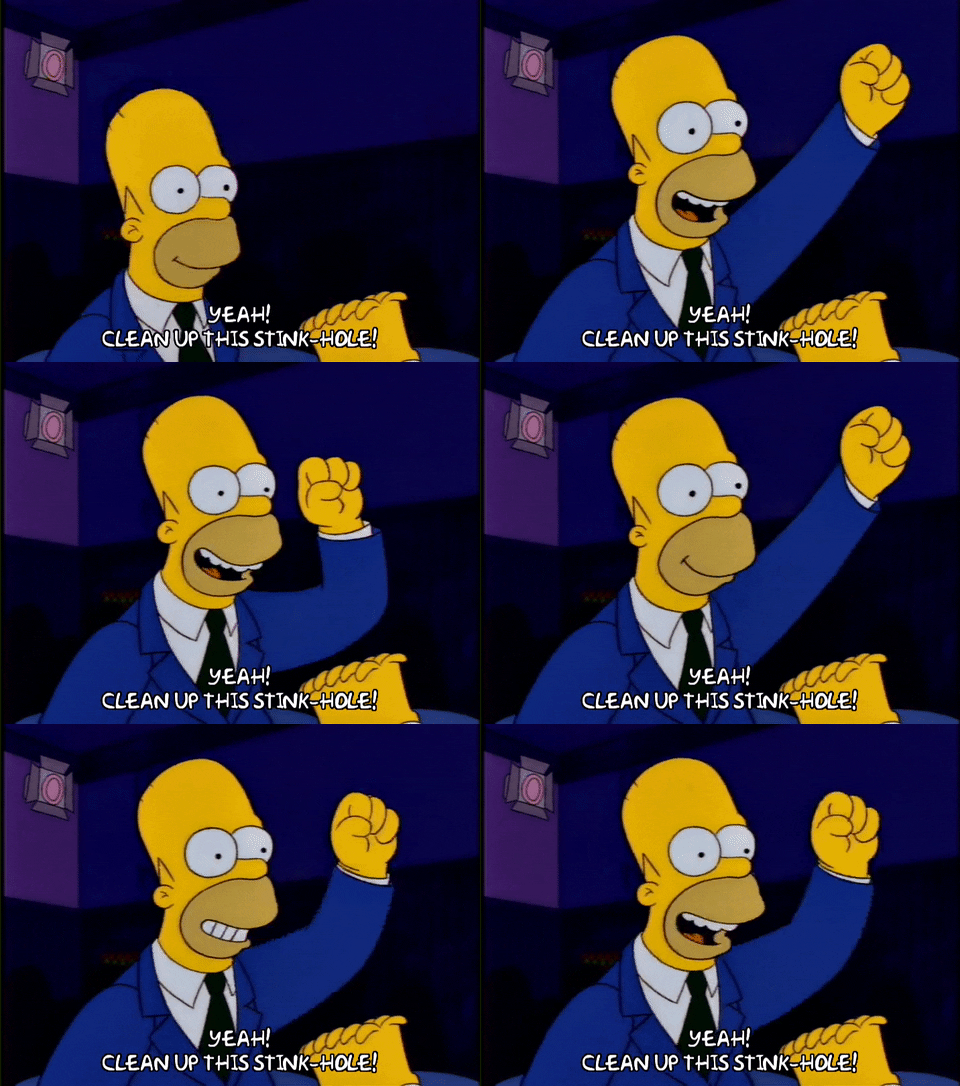
Because intuition might win rounds and build athletes…
But insight? That builds life, long martial artists.


Want more breakdowns of martial arts trends with a healthy dose of realism (and sarcasm)? Stick with The Martial Arts Muse for takes that are equal parts practical and painfully honest.

The Weird Guys (and Gals) of Martial Arts (Part 2): The Good Weirdos

The ones who keep it fun, keep it weird, and keep us all training.


Last time, we talked about the negative weirdos—the ones who make you wish martial arts came with a screening process. But today? Today’s a love letter to the good kind of weird. The kind that makes the mats feel like home.

Martial arts attracts people from all walks of life: engineers and artists, moms and misfits, the jacked and the jittery. And tucked among them are the glorious oddballs who make training worth sticking around for.

Here’s to them.


1. The Martial Arts Nerd

This person is pure neurodivergent magic.

They know the biomechanics of a guard pass better than they know how to make eye contact. Ask them about any position, and you’ll get technique breakdowns, lineage history, and maybe a slow-motion YouTube video they annotated themselves. They hyperfixate on specific moves—leg pummeling from butterfly guard for six months straight—and come back with refinements that make your game better, too.

They’re obsessive, precise, and more generous with their knowledge than they are with small talk. But if you train with them long enough, you realize they’re the quiet engine of the gym.

No memes, no ego—just pure curiosity and problem-solving energy.


2. The Old School Veteran with Surprise Moves

They don’t say much. Maybe they stretch in the corner and quietly drink coffee from a thermos that’s seen more belt promotions than you have.

But then, in the middle of a roll, they do something—something sneaky, sharp, and deeply effective—and you realize: this person has forgotten more martial arts techniques than you’ve ever dared to try.

They trained before YouTube. Before “content.” When techniques were written down and memorized by hand, and everyone just learned from the one guy in town who had been to Japan once. And yet, they’ve stayed open. Still training. Still humble. Still occasionally sweeping you off your feet without breaking eye contact.

They’re proof that martial arts doesn’t expire. It deepens. Like a good Scotch.


3. The Asshole Who Isn’t an Asshole

They look scary. They roll hard. Their face says, “I eat new white belts for breakfast.”

But once you train with them? They’re the most respectful partner on the mat.

They don’t talk much. They might never high-five you outside of class. But they feel everything—your tension, your fear, your limits—and they modulate perfectly. One minute, they’re giving you hell. The next, they’re quietly explaining how to defend that armbar better next time.

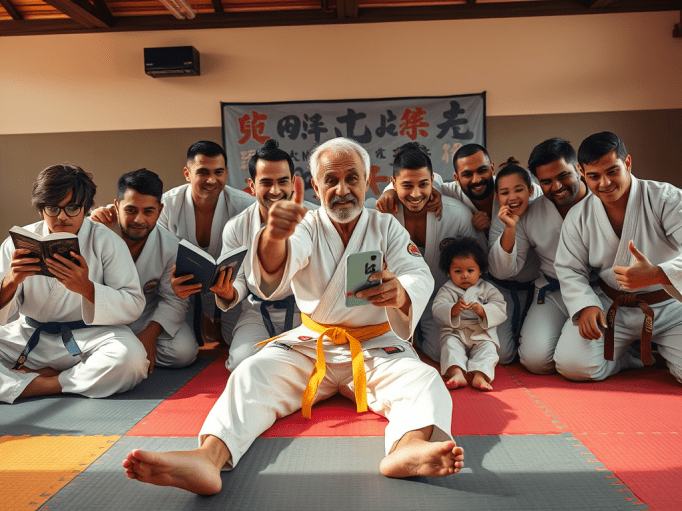
They don’t need to soften their edges. They sharpen yours. And once you earn their respect, they’ve got your back for life. And if you’re lucky, sometimes you’re surrounded by them…


4. The Memer Philosopher

Half dojo clown, half jiu jitsu therapist.

They’re always sending memes, cracking jokes during warm-ups, and giving your ankle lock a dumb nickname like “The Snap-Crackle-Pop.” But when you’re on the verge of quitting, they know exactly what to say.

They’re the ones reminding you this is supposed to be fun. That sucking at something for a long time is kind of the point. That ego death is part of the art.

Their jokes are surface-level. Their insight? Deep as hell.


5. The Tiny Person Who Destroys Everyone

They’re maybe 110 pounds soaking wet. They look like they belong in the third grade, despite being 38 years old. But they tap out heavyweights as if it were their part-time job.

They’re the best living example of technique over strength. Watching them roll is like watching gravity get rewritten. And somehow, they do it nicely. With a big smile. While asking how your day was.

They’re small. They’re kind. And they will choke you into the shadow realm without messing up their ponytail.


6. The Lifelong White Belt

They’ve been training for 7 years. Still a white belt. Still showing up.

They’re not here for rank. They’re here because this is the one place they feel grounded. They’ve weathered job changes, injuries, breakups, existential crises—and somehow, they still make it to class twice a week.

They don’t need stripes to feel progress. They measure it in quiet wins: escaping side control. Not panicking under mount. Finally getting that one pass they’ve drilled for months.

They’re not flashy. But they’re real. And they remind everyone that consistency matters more than status.


7. The Instructor Who’s Secretly Watching Your Every Move

You think they don’t even know you exist. You assume they’re too busy coaching the athletes, too focused on the killers in the room. They barely look your way during warm-ups, and they never hover during sparring.

And then, mid-class, they casually say:

“You’re still posting your right hand too far when you pass. That’s why you keep getting swept.”

…Wait, what?

You realize they’ve been watching you the whole time. Quietly. Thoughtfully. Clocking your habits, your blind spots, your progress. They’ve just been waiting for the right moment to give you exactly the feedback you needed.

They’re like the Dumbledore of the dojo. Mysterious. Observant. And way more invested in your growth than you realized.


Final Thoughts

If the mats are a jungle, these are the strange and wonderful creatures who make it feel like home.

The good weirdos. The quiet legends. The obsessive nerds and emotionally gifted goofballs. They’re not always loud. They’re not always visible. But they’re always there—holding space, sharing energy, making martial arts feel less like a grind and more like a life.

So if you’re lucky enough to train with one of them? Appreciate them. And maybe become one, too.

Because the best kind of weird is contagious.

The Weird Guys (and Gals) of Martial Arts (Part 1): The Bad Weirdos

Let’s be real: martial arts attracts weirdos.

Not the charming, quirky ones who collect nunchucks and dad jokes. No. I’m talking about the ones who make you question whether martial arts really is for everyone. The ones who weaponize trauma, misunderstanding, or just plain ego—and turn every training session into a cringe-inducing experience.

You’ve seen them. You’ve probably rolled or sparred with them. And if you haven’t… brace yourself. They’re coming.

1. The Arcane Alchemist

He’s not here to train—he’s here to transcend.

This guy believes martial arts are primarily about channelling your chi, cleansing your aura, and aligning his bone marrow to the vibrational frequency of an eagle in flight. He doesn’t spar because it disrupts his energy field. He doesn’t drill technique because it’s too “external.” He’s here to talk about meridians and internal spirals and the time he knocked out a dude using only his breath.

Ask where he learned this, and it’s always a “secret lineage” or a reclusive master in the mountains who doesn’t believe in belts. Or hygiene.

He will leave as soon as he realizes your gym isn’t a temple, and no one wants to hear about his astral projections during hip escapes.


2. Mr. “I Wanna Learn UFC”

Not MMA. Not jiu jitsu. Not striking. UFC.

This guy watches knockouts on Instagram and thinks that’s the whole curriculum. He walks into your gym and immediately asks when you’ll be doing “cage work,” as if every community centre doubles as the UFC Apex Center. He doesn’t care about fundamentals. He just wants to jump into live sparring and “go full out.”

He’s always in a Tapout shirt from a garage sale, and his pre-workout smells like regret. You know he’s going to get armbarred, guillotined, and heel hooked within the free trial week, and when he quits, he’ll tell everyone the gym “wasn’t intense enough.”

Spoiler: It was too intense—for him.


3. The Thirsty Rash Guard Girl

Yes, women can be weird too. Equality.

She shows up to her first nogi class dressed like she’s on her way to a Coachella pool party.

Minimal clothing, maximum attention-seeking. She’s not here to train—she’s here to roll with the hottest upper belts in the room. Her triangle setups make no technical sense, but she still manages to add a bonus layer of unnecessary intimacy to an already intimate technique.

You want to be supportive, welcoming, and professional—but the vibes are weird. Real weird. She rotates through male training partners like profiles on a dating app, then disappears when she figures out they’re more into hitting the technique than hitting on her.

Her gi is always freshly washed. Her technique? Not so much.


4. The Pain Tourist

This guy doesn’t want to learn. He wants to survive a fictional prison riot.

Every technique has to be “real for the street.” He’s constantly asking what you’d do if the opponent had a knife, a gun, a rabid dog, or a rabid dog weilding a gun and a knife! You’re drilling guard retention, and he’s like, “What if he bites you?” He carries himself like someone who’s preparing for a post-apocalyptic bar fight, not an inter-academy tournament.

He doesn’t trust systems or fundamentals. But he does trust his own paranoid instincts, which mostly involve flinching and trying to fish-hook people.

He’s not here to grow—he’s here to indulge his fantasy of being Jason Bourne with anger issues.


5. The Chip-on-Their-Shoulder Grappler

You can spot them before the round even starts: clenched jaw, thousand-yard stare, already sweating.

This person is not here to train. They’re here to win—at all costs. Every roll is life or death. Every partner is a proxy for their ex, their childhood bully, or whoever told them they peaked in high school. You go to flow roll, and they go full championship final. You tap them, and suddenly they’re asking for “just one more round.”

There’s always an origin story. A divorce. A workplace humiliation. A teenage trauma they never unpacked. Jiu jitsu is their therapy—and unfortunately, you are the unpaid counsellor caught in their processing loop.

To be clear, martial arts can be therapeutic. But it’s not therapy. No matter how many sweaty meme pages say otherwise.


6. The Coach Who Only Cares About the “Good” Students

This one hits different—because this person is in charge.

You notice it right away: there are favourites, and then there are invisible people. If you’re young, athletic, winning competitions, or just naturally gifted, you’re golden. The coach is watching your rolls, giving you corrections, shouting encouragement.

But if you’re older, slower, struggling with the basics, or just showing up to train consistently without fireworks? You’re background noise.

No corrections. No feedback. Just vibes. And not good ones.

What makes this extra weird is that martial arts is supposed to be for everyone. That’s the whole pitch. But some instructors treat the less “talented” students like grappling dummies—ideal to toss around, but generally ignored and left in the corner.

Meanwhile, they’re grooming their chosen few like a coach in an ’80s sports movie who peaked in college.

It’s a subtle kind of weirdness—but maybe the most corrosive of all. Because it tells people: You only matter if you win.

Spoiler: those “non-athletes”? They often end up being the toughest, most thoughtful, most dedicated students in the room. But they leave—because they know they’re not seen.


Final Thoughts

Martial arts is a magnet for misfits—and some of them are awesome. But the ones above? They’re not here to get better. They’re here to project something onto the mat: superiority, insecurity, fantasy, or trauma.

The trick is learning to spot them early, set boundaries, and focus on what you came for: growth, sweat, and maybe—just maybe—a good laugh at how weird we all are sometimes.

Next time: we talk about the good weirdos. The ones you love to have in the room, even if you can’t explain why.

Until then, keep your hands up, your mind sharp, and your vibe grounded.

Am I Worthy? The Quiet Doubt Behind Every Belt Promotion

I’m sure most of you know the feeling, even if you’ve never named it: impostor syndrome. That restless knot in your gut that says, Any minute now, they’ll realize I have no idea what I’m doing. It’s that quiet dread that your success, your skills, your rank—whatever you’ve worked for—might be built on sand.

Most people brush up against this feeling in their work. That promotion that looked shiny on paper but feels heavy on your shoulders. The job title that doesn’t match the voice in your head at 3 a.m.

For me, it’s always shown up the same way: right after a belt promotion. From the very first yellow belt that made my young heart race, to the stiff black belt that felt like it belonged on someone else’s waist, to every dan that followed, and—most recently—my purple belt in Brazilian Jiu-Jitsu.

Same question, every time: Am I worthy?


Martial Arts and the Myth of Arrival

If you’ve stuck around a dojo long enough to see the same four walls through a dozen belt colours, you know exactly what I mean. Most martial artists carry a quiet, constant discontent. A readiness to pick apart our own technique, doubt our worth, and measure ourselves against an impossible idea of “ready.”

And maybe that’s not such a bad thing. Because here’s the truth no one likes to say out loud: there’s no such thing as “arriving.” You don’t tie on a new belt and magically become the perfect version of yourself. The new rank isn’t a finish line—it’s a signpost that says: You’ve survived this far. Now here’s where it really gets interesting.

So maybe that self-doubt is just part of the contract. It’s the voice that keeps us honest. Keeps us hungry. Keeps us drilling the same arm bar for the thousandth time when the easier choice would be to coast.


Do You Trust Them?

Here’s the part we don’t like to admit. That voice—Am I worthy?—it isn’t just about you. It’s about who tied that belt around your waist.

At the end of the day, you pay for someone to teach you, watch you, push you—and judge when you’re ready to level up. They see the holes in your game that you’re blind to. They see the things you do right when you’re too busy obsessing over everything you do wrong.

If you trust your instructor, then trust the belt they gave you. If you don’t trust them—then you’re probably in the wrong dojo. It’s that simple.

Every time we second-guess our rank, we’re also second-guessing the person who handed it to us. And maybe that’s the part we should wrestle with harder than the question in our own heads.


What Your Doubt Means to Everyone Else

And then there’s everyone watching. The white belt you just drilled takedowns with. The kid staring up at your new belt, wondering how many years they’ll have to grind to get there too. The training partner who sees you as proof that all those hours on the mat actually lead somewhere.

A little humility is a good thing. Nobody likes the loudmouth blue belt who thinks they’re untouchable. But there’s a fine line between humility and disrespecting the path that got you here. If you keep brushing it off—I don’t deserve this, I’m not ready, they’re just being nice to me—you’re not just trashing your own work. You’re cheapening the process for everyone who wants to stand where you’re standing.

So wear it with the humility it demands—but also with the backbone to match. The belt is not a gold star. It’s a mirror. Live up to it.


So, Is It Useful?

Is this low hum of impostor syndrome useful? Sometimes. It’s the thing that keeps us drilling basics when ego tells us we’re too advanced. It’s the voice that says, Try again, when the lazy part of us says, Good enough.

But like any tool, it cuts both ways. Let it keep you sharp—don’t let it dull your spirit.

When you stand there, tying on that new belt with sweaty hands and that whisper in your ear—Am I worthy?—remember this: you probably wouldn’t feel that way if you weren’t the kind of person who cares enough to earn it again tomorrow.

That doubt is not your enemy. It’s the promise that you’ll keep showing up. Keep testing yourself. Keep stepping onto the mat to be proven wrong, proven right, proven human—again and again.


So let the whisper come. Let it circle you like a ghost. Then take a breath, bow in and roll anyway.

Because the only thing worse than being exposed… is never stepping up to be tested at all.

Why Women Quit Brazilian Jiu-Jitsu (and All Martial Arts, Really): The Real Deal (And How We Can Fix It)

So you’ve seen more women hitting the mats lately — awesome! But you’ve probably also noticed that a lot of them don’t stick around. Why do women quit BJJ, a sport that’s supposed to be about empowerment, grit, and, well, chokeholds?

Spoiler alert: it’s not just BJJ. These challenges play out across all martial arts.

Turns out, quitting isn’t always about toughness or lack of willpower. It’s more about the environment, the culture, and yes, sometimes just how physically and psychologically demanding the sport really is. Here’s what I found, after digging into Reddit threads, surveys, and some real talk from the mats.


It’s Not “Just” Injuries or Time — But They Matter

Let’s start with the obvious. Injuries suck. Martial arts are not a Sunday stroll — they’re physical grinds, and injuries pile up like laundry after a week-long training binge. One Reddit user summed it up nicely:

“I loved training, but after several nagging injuries and a hectic work schedule, I just couldn’t keep up.”

Busy schedules and life changes—kids, jobs, and the dreaded “adult stuff”—also pull people off the mats. Women often juggle more of these responsibilities, which can mean less time and energy for training.

But injuries and time, while universal hurdles, are just the start for women.


When the Gym Culture Feels Like a Contact Sport of Its Own

This is where it gets tricky. Women report facing microaggressions, awkward (or worse) advances, and a culture that sometimes feels less like a supportive dojo and more like a boys’ club with grappling.

A user on Reddit’s r/xxfitness nailed it:

“Sometimes you feel like you’re not there to learn but to be the token girl or worse, to entertain some guys’ egos.”

Training shouldn’t feel like an audition for a reality show titled “How Much Can She Take?” But sadly, many women experience exactly that.


The Isolation Factor: When You’re the Only Woman on the Mat

Nothing like being the lone woman surrounded by twenty dudes who think “tap” is just a style of dance. It can feel like every mistake is magnified, like you’re carrying the weight of representing all women in martial arts.

One purple belt shared on a forum:

“It can feel like you’re representing all women, so every mistake or failure feels magnified.”

Isolation breeds self-doubt, and self-doubt leads to walking away.


Partnering Mismatches: When Training Partners Are More Like Giants

Martial arts training is intimate — you’re literally rolling around, tangled up with strangers. If you’re a 135-pound woman paired with a 300-pound man who looks like he bench-presses cars, it’s less “challenge” and more “survival mode.”

This can make training feel unsafe or discouraging rather than empowering. It’s not just about strength — mismatched partners can knock confidence down like a row of dominoes.


What the Numbers Say (Even If We Don’t Have All the Answers)

Women are estimated to make up about 20% of BJJ practitioners, but fewer than 1 in 10 are coaches — and even fewer are black belt head instructors. That’s a glaring gender gap — and representation matters.

A survey from the Women in Sport Institute highlighted how body image and puberty-related issues cause many girls and women to drop out of sports early — and those factors echo in martial arts dropout rates too.

There aren’t many hard stats on why women quit BJJ specifically, but anecdotal evidence, surveys, and forum chatter tell a consistent story: injuries, time constraints, toxic culture, and lack of support top the list.


This Isn’t Just BJJ — It’s a Martial Arts-Wide Challenge

While I’m focusing on Brazilian Jiu-Jitsu, since it is the main martial art I practice now, the reality is these issues affect women across all martial arts — whether it’s karate, taekwondo, judo, muay thai, or any other style. The combination of physical injuries, male-dominated training spaces, and cultural barriers is a common thread that can drive women away.

The good news is that the solutions are similar across disciplines: fostering respect, creating safe and inclusive spaces, offering women-specific programs, and mentoring. When martial arts gyms commit to these changes, everyone benefits.


How Gyms Can Step Up and Keep Women on the Mats

The good news? This isn’t a lost cause. Gyms can do a lot to make martial arts more welcoming for women — and everyone benefits.

  • Create an inclusive culture. Call out bad behavior, foster respect, and make it clear harassment won’t be tolerated.
  • Offer women-only classes or open discussions. Safe spaces build confidence and community.
  • Mentorship programs. Pair new female practitioners with experienced women to guide and encourage them.
  • Be mindful about training partners. Avoid pairing women with partners so mismatched that they’re scared before the first grip.

Final Thoughts

Women don’t quit martial arts because they’re not tough enough. They quit because the sport sometimes asks more than it gives back — especially in environments that don’t acknowledge their specific challenges.

If we want more women sticking around and thriving on the mats, it’s on us — instructors, gym owners, and teammates — to listen, adapt, and create spaces where everyone feels respected and empowered.

Every roll should build trust, every tap should build respect. If women leave because we failed at both, then maybe the real fight was never on the mats — but in how we treat each other off them.


Having posted previously about women’s issues in the martial arts, I know I will receive some provincial, small-minded and hateful comments, and to that I say: “You don’t win friends with salad!”

If you’re a woman who’s trained martial arts, or a coach wanting to improve gym culture, I’d love to hear your thoughts. Drop a comment or reach out — this conversation matters.

“Just Bridge” – A Females Perspective on Grappling

“Just bridge…”

“Just push them over…”

This might just be me, but the word “just” might be the most condescending word in the English language.

The word “just” sometimes implies a sense of simplicity or insignificance, which can inadvertently belittle the complexity of a situation or someone’s efforts. For instance, phrases like “It’s just a minor issue” might downplay someone’s concerns or experiences.

Its undertones can create an air of superiority or impatience, subtly diminishing the importance of the matter at hand. To foster respectful and inclusive communication, it’s important to be mindful of the potential condescending undertones associated with the word – in this instance, in the context of martial arts classes.

If accomplishing something were truly as easy as “just” doing it, there would be no need for consistent practice and dedication.

In my 25+ years of experience in martial arts, I’ve found it common for some instructors to underestimate the differences in strength, speed, power, and leverage between their male and female students. I’ve seen this even more so with men I’ve rolled and sparred with.

Some such differences can include strength, bone density, fast-twitch muscle groups, and reach, which can sometimes make it much more difficult for a female to perform as well against their male counterparts.

But this isn’t the only dichotomy; this can also be seen with taller instructors/ sparring partners underestimating the issues faced by shorter students and vice versa, or younger instructors/sparring partners with older students, etc.

When the instructor tells the group to roll or spar at “50%” (which often very few people do, except for those with experience), it’s important to remember that one person’s 50% effort can be another person’s 120% effort. Hence, the younger, stronger, or more experienced grapplers or strikers must remember to curb their efforts towards the capacity of their older, weaker, or less experienced partners.

This act of equity can ensure that both parties can enjoy the practice while still learning. Nobody enjoys the feeling of being completely crushed by their partner in practice, particularly when they are truly putting their best efforts forward – it’s defeating.

Hence, in such scenarios, when the partner or instructor asks, “Why didn’t you just armbar me?” or says, “You know you could have just bridged and rolled there…” They’re actually rubbing salt in an open wound. If knowing the correct technique was all that was needed to be competitive in martial arts as a sport, we wouldn’t have weight classes, and steroids wouldn’t be so frowned upon.

But whether you practice martial arts for sport and fitness or for self-defence, knowing how to adjust your energies for the benefit of your partners and how to communicate with them effectively, as well as how to communicate to others how to do so for the sake of your students if you’re instructors, can make the difference between a growing community within your club and disgruntled ex-students.

So, let’s retire the word “just” from our martial arts vocabulary—at least when it’s used to trivialize challenges or dismiss effort. Progress in martial arts, like in life, is rarely simple, and implying otherwise undermines the grit, growth, and respect that define the journey. Whether you’re sparring with a partner, teaching a class, or simply offering advice, choose words that build bridges, not barriers.

Because in the end, martial arts isn’t about “just” winning—it’s about lifting each other up, one roll, one spar, and one carefully chosen word at a time.

Exposing the Shadows: The World of Fake Martial Arts

Martial arts have held a place of fascination for centuries, captivating individuals with tales of discipline, mastery, and honour. From the flowing movements of Tai Chi to the explosive strikes of Muay Thai, these practices are steeped in tradition and dedication. However, within this realm of authenticity, a darker underbelly exists — the domain of fake martial arts. This blog delves into the depths of fake martial arts, unravelling their origins, distinct characteristics, and the insights of Rob Ingram, the driving force behind McDojoLife.

Origins of Fake Martial Arts

The origins of fake martial arts can be traced back to a mixture of misinformation, sensationalism, and a hunger for spectacle. A parallel demand for intrigue and entertainment arose as martial arts gained worldwide popularity. This demand created a breeding ground for individuals who claimed to possess supernatural abilities through their martial arts practice. Some boasted mastery over the mysterious forces of “chi” or “ki,” performing feats that appeared almost magical, such as shattering bricks with gentle touches or levitating.

Distinguishing Characteristics

  1. Dubious Claims: At the heart of the world of fake martial arts are dubious claims that immediately raise suspicions. Practitioners often assert that their techniques are so lethal that they cannot be used in real combat situations, conveniently avoiding any empirical scrutiny. This evasion of practical application casts doubt on the authenticity of their skills.
  2. Mystical Pseudo-Science: Fake martial arts frequently rely on mystical and pseudo-scientific explanations to legitimize their extraordinary claims. Buzzwords like “energy manipulation” and “mind over matter” create an aura of mysticism that appeals to those seeking the extraordinary. In contrast, genuine martial arts emphasize rigorous training and physical conditioning.
  3. Avoiding Pressure Testing: Legitimate martial arts advocate for pressure testing and sparring as essential tools for refining skills and assessing progress. However, fake martial arts often resist any form of controlled pressure testing, using excuses like “deadly intent” or “potential harm to opponents.” This evasion only serves to deepen suspicions about their legitimacy.
  4. Veiled Techniques: Fake martial arts often boast hidden “secret techniques” accessible only to a select few after years of intense training. This air of exclusivity further separates their claims from the tangible, observable nature of authentic martial arts.

Rob Ingram’s Insights

Rob Ingram, the founder of McDojoLife, has been a leading figure in exposing fake martial arts. McDojoLife is an online platform dedicated to shedding light on martial arts fraud and deception. Ingram’s perspectives resonate deeply with the concerns surrounding fake martial arts and offer 5 rules of what makes up a McDojo:

  1. NoTouch Knockouts
  2. Pedophiles
  3. Unsafe Training / Cult Behavior
  4. Shady Business Practices
  5. Lying about Belt Rank or Fight Record

Distinguishing fake martial arts (or McDojos) from the real deal is crucial because it protects the integrity of true martial artists who have dedicated their lives to mastering their craft.

Dangers of Fake Martial Arts

  1. False Sense of Security: Placing trust in the exaggerated claims of fake martial arts can foster a false sense of security. When confronted with a genuine self-defence scenario, relying on unproven techniques can lead to disastrous consequences.
  2. Wasted Time and Effort: Committed students who invest their time, energy, and finances in pursuing fake martial arts can find themselves disillusioned when they realize their skills are ineffective. This disillusionment can take both an emotional and financial toll.
  3. Missed Opportunities: Opting for fake martial arts may prevent individuals from exploring authentic practices that offer practical skills, physical fitness, and personal growth.
  4. Tarnished Reputation: The prevalence of fake martial arts not only impacts those who fall victim to their deception but also casts doubt on the reputation of martial arts as a whole. Skepticism can extend to legitimate martial arts practices, hindering their deserved recognition.

Conclusion

In an age of rapid information dissemination, it’s imperative to exercise discernment when delving into any discipline, martial arts included. Fake martial arts and McDojos, with their tantalizing promises of supernatural abilities, pose a significant threat to the authenticity of genuine practices. By understanding the hallmarks of fake martial arts and their potential hazards, we equip ourselves to make well-informed choices.

As enthusiasts of martial arts, it’s our responsibility to uphold the values of discipline, respect, and humility that underpin authentic practices. By illuminating the shadows cast by fake martial arts, we contribute to preserving the rich traditions and invaluable life lessons that genuine martial arts offer. Let us tread the path of authenticity, dedicating ourselves to the pursuit of genuine skills, physical well-being, and personal development. Exposing fake martial arts and McDojos is about safeguarding the integrity of a beautiful and enriching discipline, ensuring it remains true to its roots.

Enjoyed this post? Check out “Are You Practicing BullSh!t Bunkai?”

Bunkai, Karate, Oyo, Kata Applications

What Is Violence?

Violence is gross.

Violence is sticky.

Violence is intimate.

Violence is a solution.

Violence is a tool. 

Tim Larkin has a quote, which I’ve touched on before, “when violence is the answer, it’s the only answer.” 

Because violence is all these things, it is something that many people covet, and for those who study it, hold it and wield it with the utmost respect. 

When two or more people enter a violent encounter, they’ve entered a unique human relationship. And I think many, even those with martial arts experience, underestimate the intimacy, closeness and extremely gross nature of real violence. 

One such element is the fact that you may well be exposed to, ingest and be showered in human bodily fluids. Blood, sweat, piss, feces, tears, saliva – you can encounter one or more of these when interacting with violence. Movies only show a portion of these, while training may expose you to a few more. Those who have accidentally choked out a partner may know that when someone passes out, things release, and if you’re behind them, they’ll release on you. It’s sticky. It’s disgusting.

Violence is one of the few situations where you’ll be in the type of proximity with another person usually only reserved for romantic interactions and familial relationships. Intimacy is one of the key elements of violence and probably one of the reasons, I think, it’s so frightening. 

Violence has to be intimate. If you’re close enough to kiss, you’re close enough for a head butt. And just like love, it targets the most vulnerable parts of you. Intimacy targets your weakest parts.

This is why martial arts have such an emphasis on respect. Funakoshi said, “Karate begins and ends with respect.”

Every class, we enter into a violent relationship, but not true violence. It’s more like theatrical violence. It’s an act of play. You play one role while your partner plays another. “All the world’s a stage, all the men and women merely players.”

But if we don’t respect the roles we play, we can easily break the 4th wall into reality. Those who understand and respect violence know this. When we lose sight of playfulness in the dojo, we enter into the realm of real violence, which becomes increasingly intimate and gross.

But this playful nature can also land people in a complete fantasy world.

There are martial arts out there that avoid the ground, grappling, and closeness in general. If they claim to sell self-defence without integrating these aspects, they most certainly don’t understand violence.

I heard a story once of a traditional karate practitioner at a seminar that involved hand wrestling, and she said she wouldn’t participate because “she doesn’t like being grabbed.”

Do you know who cares less about your comfort level than you do? Everybody.


The unfortunate thing about violence is it doesn’t care about your comfort level for touch, and if you’re a target of it, you generally don’t have much say in the matter.

I’ve seen those with machismo claim that they could handle x-z violent situation, and I’ve watched chi-ball flinging nutcases say the same. Those who have experience in real violence and understand it aren’t usually too quick to throw judgement, make outrageous claims about beating others, or “wishing a guy would.”

Why? Because violence is literally one of the worst things imaginable, to be a victim of it and to be in a situation where one would need to use it.

Do you know the sound of the ligaments snapping beneath you?

Have you felt life leave someone’s body as their brain is denied oxygen by your hands?

Have you heard the howls of pain as bones are shattered by your intention?

Even worse, have you been on the receiving end of these?

No? Me either!

But, surviving soldiers of war will be the first to tell you how awful the reality violence is. When I spoke to my grandfather about WW2, he shook his head and said, “war is hell.”

As students of violence, we need to walk the middle path of it. We need to explore it at a depth that allows us to do so safely but also with just enough breath to not enter into the realm of bullshido.

Only those with extensive experience know how to create an atmosphere and culture that balances the play and realities of this unique and extremely human interaction. That’s why it takes so long to get a black belt, or at least, one that most acknowledge and respect.

To understand it, you need to both push and respect the boundaries of the theatrical violence we engage with within our gyms and dojos. And this symbiosis is easily disrupted with poor attitudes, bad intentions, and ignorance, easing us out of play into real violence or pushing us further into unreality. Both are unhealthy and lead to potentially dangerous and even deadly consequences.

So what are we to do as teachers and students of violence?

To replicate the intensity, we must pressure test.

But always with the concern and well-being of our partners.

And always with respect for the tool of violence for which wield.

Enjoyed this blog? Check out Does Your Karate Have “Flavour”?!

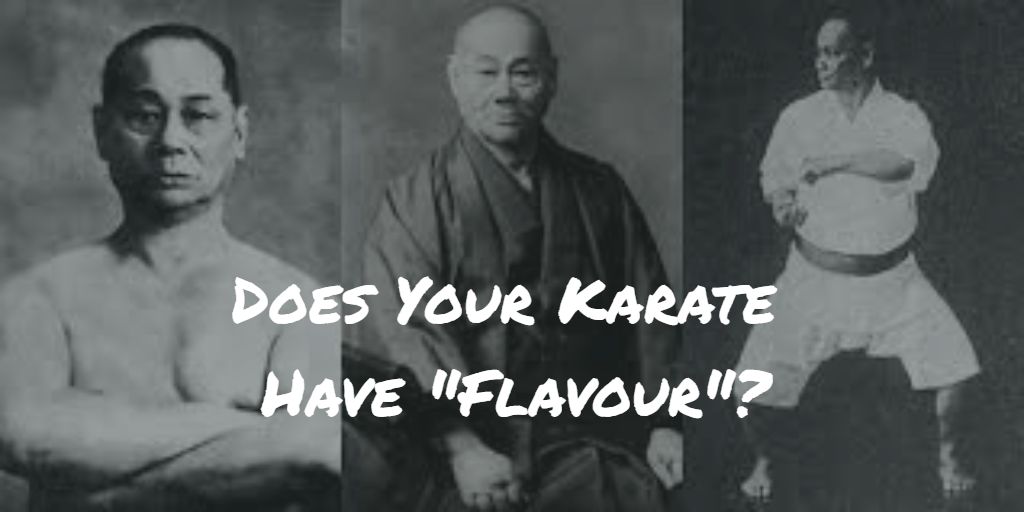
Does Your Karate Have “Flavour”?

“It is necessary to drink alcohol and pursue other fun activities. The art [karate] of someone who is too serious has no flavour.” – Motobu Choki

I have a karate friend, sharing the sentiments of Motobu, who said, “if you can’t do a kata drunk, you can’t do it at all!”

I know of many BJJ practitioners who choose to smoke weed before training. Even while attending BJJ tournaments here in Canada, where marijuana is legal, I’ve seen dozens of practitioners smoke a joint before their matches. In the hopes to, as Eddie Bravo as said, “rely more on your instincts,” and let “your body take over. . . you don’t think about it, you just do it.”

Although I’ve never been high while training, I have taken CBD before practice and can speak to its benefits. I was far more relaxed both mentally and physically. When hitting mitts, I didn’t get gassed out as quickly, and my technique was far more on point. While grappling, I didn’t feel as anxious while being smothered in bottom positions, which allowed me to see more openings for escapes and various submissions. I also cared less about making mistakes; I took more risks that I might otherwise be afraid to take. Because of this, I found the experience generally more enjoyable. I embraced the experience of training.

One doesn’t need to do drugs or alcohol to gain these benefits. Simply, one can embrace child-like playfulness. Hence, so many speak of the importance of the beginner’s mind, shoshin, a concept from Zen Buddhism, for which I find many advocate but rarely actually practice.

I’m not necessarily trying to support alcohol or drug use in training, but there’s something to be said about the quality of someone’s practice and their relaxed nature towards their martial arts.

Rigidity does not breed creativity.

In the video below, Firas Zahabi speaks to the importance of this.

He uses Muay Thai and Russian wrestlers as an example. The Russians don’t go full out every practice; they have a type of focused play. Because they’re not too serious when practicing, their training is more explorative and allows for more consistent, quality reps.

Regarding Muay Thai practitioners, who have also been known to smoke and drink before their matches, Firas speaks about when they train with someone too serious or aggressive; they’ll view the individual as “too amateur.”

In an episode of the Ultimate Fighter, George St. Pierre introduced a French Muay Thai fighter who would get drunk before training and referred to him as a “free-thinker.”

GSP has also been known to have a glass of wine during his training camps. One of my favourite pass times on a sunny weekend afternoon is to enjoy a glass of wine while going through kata, or practicing weaponry. Not unlike having a beer at the golf course, it makes the practice more enjoyable and makes it an act of unwinding.

The underlying principle of using alcohol or drugs to facilitate practice, I think, is to allow for a flow state, which, as Firas Zahabi points out, is key to consistent and enjoyable training. So when Motobu speaks of flavour, perhaps he means that someone who is too serious has no flowwhich I think most can agree, is essential for creativity and functional spontaneity. 

Regardless of whether you choose to use alcohol or drugs or reap the benefits of integrating it into training, practicing martial arts should always be fun. Instructors who take themselves and their art too seriously tend to be less than enjoyable to train with, can be insufferably traditional and a complete bore. Do you think Motobu’s quote was directed at Funakoshi?

Martial arts like a fine wine, you don’t drink it with the purpose of finishing the glass, but to enjoy every sip. If you’re not enjoying the journey, why continue on the path?

Cheers!

Enjoyed this blog? Check out Karate and The Sunk Cost Fallacy!

5 Tips To Avoid Failure In Martial Arts

With 20 years in martial arts, I’ve watched a lot of people fail. Not necessarily in the physical or technical sense, but a whole lot in the philosophy and attitude sense. 

On a side note, it can often be those who excel in the physical arena that lack the correct attitude to realize their potential, while those who fail to pick up techniques easily possess the true grit to succeed. 

Whatever your ability, I’ll hope you’ll enjoy and apply these five tips to avoid failure in the martial arts.

#1 – Self-Respect

Why did you join your martial arts club? Was it a fun way to get fit? Did you want to learn self-defence? Were all the cool kids doing it? 

Whatever the reason is, always try to be conscious of what motivates you to be there. 

You’ll have a lot of muggles out there who will never understand why you choose to spend your evenings getting hit, thrown, and mauled by other human beings rather than sit on the couch, eating chips, binge-watching Netflix. Many muggles will also try to convert you to the dark side: “It’s so warm underneath this blanket. . . Why don’t you stay in with me?” 

Remember, it’s warm under a 250lbs guy in BJJ, too! 

And, yes, the dark side has cookies! But just say no! 

The seed that inspired you to join your martial arts club is one of self-respect. You’re there to improve yourself physically, mentally and emotionally. Every time you step on the mat, you’re doing something that most of the population is unwilling to do. Don’t let unmotivated people unmotivate you.

Self-respect is the foundation to excel in martial arts.

#2 – When There’s A Correction, Always Assume It’s You.

Often, instructors will stop a class to provide corrections, usually with a few people in mind. Always, ALWAYS, assume it’s you. 

YES! YOU!

When you assume, “I’m not the one making a mistake,” that’s a mistake. 

Generally, those who believe they are not the culprit needing correction, their minds tend to drift off, and they pay no attention to the instructor. However, observing and listening to the instructor during these moments are essential for acquiring new information, whether it’s for you or not. If the class’s general populace is not getting things right, the instructor usually will phrase it differently or emphasize elements you may have missed the first round. 

Also, everyone, even black belts, has areas on which to improve. When the instructor takes the time to stop the class, try two things: 

  1. Be very mindful of how you are applying the technique and ask yourself, “Am I truly performing this as I was instructed?” 
  2. If you perform the technique in line with the instruction, be very mindful of what the instructor did to make it look so fast, smooth and accurate, and try to implement those elements. 

#3 – Be Humble & Have Faith In The System You Practice.

When you join a martial arts club, you’re not just learning a martial arts style; you’re learning a curriculum and system specifically designed by your head instructor. 

Just because you have experience in another martial art or the same martial art but in a different club doesn’t mean that you will be successful in the current organization you attend. 

Some misguided wrestlers often assume they should be promoted to a blue belt in BJJ faster than other participants just because they have grappling experience. What determines your level at any given school is your ability to pick up the head instructor’s curriculum. If you don’t know the curriculum, you won’t get a belt, no matter your previous experience.

If you don’t trust your instructor to make a fair assessment of your technique, then why are you still there? If you are going to learn from a specific instructor, you have to have faith in what they teach. You’re not going to get very far if you question their motives and reasonings all the time. And, if you do feel inclined to do so, then you’re obviously in the wrong place.

#4 – Patience 

There’s just no substitute for time. For many martial arts schools, it can take up to 10 years or even longer to achieve your blackbelt. That’s quite the time commitment. Your success in any martial art is 100% dependent on your willingness to invest time and effort into acquiring the skill.

To be good at martial arts, you have to be willing to drill techniques repeatedly, attend multiple classes per week, get slammed around a whole lot, and then patiently wait for a promotion. 

In my dojo, we often tell our students, “If you have to ask to be promoted, then that’s a good sign you’re not ready to be promoted.” Those who are ready to be moved up are given a new rank on the day they are ready. So, if you haven’t received your belt, then you don’t deserve it yet. 

#5 – Reciprocity 

One of the most important concepts I learned in martial arts is reciprocity. Whether it comes to how people treat you, the standing you have in the dojo and the belts you receive, it is all dependent on the efforts you apply. You always get back what you put in. 

When I started teaching in my dojo, it was because I wanted to learn more. I started volunteering my time as a green belt to help out with the lower belt classes. I didn’t get paid any money. I got paid with further instruction from my Sensei. As a volunteer, I was able to take advantage of the extra time spent with my instructors. I could ask them questions before and after the additional classes I attended, not to mention the value that comes with learning to effectively communicate the execution of any given technique. 

I was told once to “always give 30% more than what you expect in return,” I try to apply that in all my relationships, whether with friends, family, colleagues, students or teachers. The value you offer will always be obvious, and you are, therefore, indispensable–at least, to those who also understand the concept of reciprocity. 

Conclusion

At the heart of all these concepts is respect. Respect for yourself. Respect for your classmates. Respect for your teacher. Sensei Funakoshi once said, “Karate begins and ends with respect.” This phrase, of course, extends across all martial arts. If you’re wondering why you’re not as successful in a martial art, ask if you have demonstrated: 

  • Respect for yourself and others
  • Patience and humbleness
  • Reciprocity

If not, it’s not technique you need to work on. It’s yourself. 

Message from The Martial Arts Muse:

Hi there! I hope you enjoyed my most recent blog, 5 Tips To Avoid Failure In Martial Arts ! To show my appreciate for checking out my blog, you can get 10% off at Diamond MMA with the code JENN10. Click here to check out Diamond MMA’s website and products!

Thanks again for reading! Happy Trails!

Jennifer Thompson

Enjoyed this blog? Check out Are You Practicing Bullsh!t Bunkai?

Bunkai, Karate, Oyo, Kata Applications
/