The Problem with Modern Karate Bunkai and Oyo

Bunkai and oyo — the living, breathing applications behind kata — have long been the secret treasure chest of karate.

They promise to reveal how the beautiful, flowing movements of kata can become practical techniques when an opponent strikes. Yet, in today’s karate landscape, these practices often fall short of their true potential. In fact, I see a growing problem: modern bunkai and oyo frequently drift away from reality, creating confusion rather than clarity.

What Is Bunkai and Oyo — And Why Does It Matter?

Put simply, bunkai is the process of carefully analyzing kata to break down what each movement means — the hidden strikes, locks, or throws it contains. Oyo, on the other hand, is applying those ideas in practice, adapting and adjusting them to fit unpredictable, real-life situations. Many people use these terms interchangeably because they naturally flow together: you can’t truly apply (oyo) what you haven’t first understood (bunkai). But they aren’t the same — bunkai is the analysis, oyo is the application. Good training respects both.
When done right, bunkai and oyo turn kata from mere patterns into a toolkit for real combat. They help practitioners move beyond rote memorization and into understanding body mechanics, timing, and strategy.

But the quality of bunkai and oyo varies wildly, and too often it misses the mark.

The Core Issue: Practicality Over Performance

One common complaint I hear from karateka on forums and in conversation is that bunkai and oyo sessions can feel disconnected from actual fighting. It’s not uncommon to see applications that:

  • Are overly theatrical: Slow-motion techniques that look impressive but wouldn’t stand up in a real fight.
  • Ignore resistance: Partners cooperating too much or attacks that don’t realistically simulate aggression.
  • Over-focus on striking: Punches and kicks dominate, leaving out vital elements like joint manipulation or grappling.
This mismatch between kata interpretation and practical self-defence is frustrating. I call this “bullshit bunkai” — applications that look good on the mat but fail under pressure. Worse, it can condition students to rely on techniques that don’t work, wasting years of training and potentially putting them at risk.

The Elephant in the Dojo: “Cross-Training” Without Foundation

In an era of mixed martial arts (MMA) and cross-training, it’s tempting to enhance bunkai and oyo by borrowing from judo, Brazilian Jiu-Jitsu (BJJ), or Muay Thai. After all, these arts offer proven techniques for grappling, joint locks, and striking.

But here’s where many practitioners go wrong. I see a lot of karatekas trying to integrate these elements without genuine experience or training in those arts. The result? Techniques that are:

  • Performed incorrectly: Missing key details in grip, positioning, or timing.
  • Mechanically unsound: Movements that defy the principles of the borrowed art.
  • Potentially unsafe: Risking injury to themselves or training partners.

It’s like trying to play Beethoven’s symphonies without ever learning to read music or play an instrument. The intentions might be good, but the execution is lacking — sometimes disastrously so.
This misguided integration can create a false sense of skill, where a practitioner believes they have a diverse arsenal but actually carries a set of ineffective moves with awkward execution. It undermines the integrity of both karate and the arts they try to borrow from.

So, What Should You Do? Grounding Bunkai and Oyo in Reality

I encourage karate practitioners to approach bunkai and oyo with a grounded, practical mindset. Here are some key principles I always stress:

1. Understand the Fundamentals

Before adding complexity, dig into the foundational principles of body mechanics and understanding violent encounters. What is the intent behind each of your kata applications? What kind of attack or situation might it realistically respond to? Sometimes, what appears to be a complicated movement pattern done solo is actually built on simple, efficient body mechanics that are far easier to understand and apply when practiced with an engaged partner.

2. Train with Resistance and Reality

Don’t let oyo be a staged performance. Train with partners who apply realistic pressure and resistance. Incorporate sparring or flow drills that test your applications dynamically. This helps reveal what works and what doesn’t — no matter how traditional the technique looks.

3. Respect Other Arts

If you want to borrow techniques from judo, BJJ, or Muay Thai, start by training those arts properly. Learn their mechanics, timing, and principles firsthand rather than picking and choosing moves out of context. This will allow you to integrate new techniques with respect and effectiveness.

4. Be Creative — But Practical

Bunkai and oyo are about creativity, adapting techniques for new scenarios. But creativity shouldn’t sacrifice function. Always ask yourself: “Could this realistically work against a resisting opponent?” If the answer is no, it’s time to rethink.

5. Seek Knowledge, Not Just Tradition

While tradition is important, don’t treat kata or its applications as sacred texts that can’t be questioned or adapted. Martial arts must evolve to remain relevant. Listen to experienced instructors who emphasize practical application and open discussion.

Final Thoughts: Evolving While Honouring Tradition

Kata and the techniques derived from bunkai and oyo are not relics to be preserved in amber, nor are they mere choreography. They are tools designed for one purpose: effective self-defence.

My perspective is simple: the path to mastery lies in honest, practical training — not in forcing techniques to fit or borrowing moves superficially. The arts that have survived centuries did so by adapting, testing, and improving.

So, whether you’re a beginner or a seasoned black belt, approach bunkai and oyo with an open mind. Train smart, train real, and keep your martial arts journey authentic.

Because at the end of the day, martial arts are about more than just tradition or showmanship. They’re about being ready when it counts.
Exposing the Shadows: The World of Fake Martial Arts

Martial arts have held a place of fascination for centuries, captivating individuals with tales of discipline, mastery, and honour. From the flowing movements of Tai Chi to the explosive strikes of Muay Thai, these practices are steeped in tradition and dedication. However, within this realm of authenticity, a darker underbelly exists — the domain of fake martial arts. This blog delves into the depths of fake martial arts, unravelling their origins, distinct characteristics, and the insights of Rob Ingram, the driving force behind McDojoLife.
Origins of Fake Martial Arts

The origins of fake martial arts can be traced back to a mixture of misinformation, sensationalism, and a hunger for spectacle. A parallel demand for intrigue and entertainment arose as martial arts gained worldwide popularity. This demand created a breeding ground for individuals who claimed to possess supernatural abilities through their martial arts practice. Some boasted mastery over the mysterious forces of “chi” or “ki,” performing feats that appeared almost magical, such as shattering bricks with gentle touches or levitating.

Distinguishing Characteristics

  1. Dubious Claims: At the heart of the world of fake martial arts are dubious claims that immediately raise suspicions. Practitioners often assert that their techniques are so lethal that they cannot be used in real combat situations, conveniently avoiding any empirical scrutiny. This evasion of practical application casts doubt on the authenticity of their skills.
  2. Mystical Pseudo-Science: Fake martial arts frequently rely on mystical and pseudo-scientific explanations to legitimize their extraordinary claims. Buzzwords like “energy manipulation” and “mind over matter” create an aura of mysticism that appeals to those seeking the extraordinary. In contrast, genuine martial arts emphasize rigorous training and physical conditioning.
  3. Avoiding Pressure Testing: Legitimate martial arts advocate for pressure testing and sparring as essential tools for refining skills and assessing progress. However, fake martial arts often resist any form of controlled pressure testing, using excuses like “deadly intent” or “potential harm to opponents.” This evasion only serves to deepen suspicions about their legitimacy.
  4. Veiled Techniques: Fake martial arts often boast hidden “secret techniques” accessible only to a select few after years of intense training. This air of exclusivity further separates their claims from the tangible, observable nature of authentic martial arts.

Rob Ingram’s Insights

Rob Ingram, the founder of McDojoLife, has been a leading figure in exposing fake martial arts. McDojoLife is an online platform dedicated to shedding light on martial arts fraud and deception. Ingram’s perspectives resonate deeply with the concerns surrounding fake martial arts and offer 5 rules of what makes up a McDojo:

  1. NoTouch Knockouts
  2. Pedophiles
  3. Unsafe Training / Cult Behavior
  4. Shady Business Practices
  5. Lying about Belt Rank or Fight Record

Distinguishing fake martial arts (or McDojos) from the real deal is crucial because it protects the integrity of true martial artists who have dedicated their lives to mastering their craft.

Dangers of Fake Martial Arts

  1. False Sense of Security: Placing trust in the exaggerated claims of fake martial arts can foster a false sense of security. When confronted with a genuine self-defence scenario, relying on unproven techniques can lead to disastrous consequences.
  2. Wasted Time and Effort: Committed students who invest their time, energy, and finances in pursuing fake martial arts can find themselves disillusioned when they realize their skills are ineffective. This disillusionment can take both an emotional and financial toll.
  3. Missed Opportunities: Opting for fake martial arts may prevent individuals from exploring authentic practices that offer practical skills, physical fitness, and personal growth.
  4. Tarnished Reputation: The prevalence of fake martial arts not only impacts those who fall victim to their deception but also casts doubt on the reputation of martial arts as a whole. Skepticism can extend to legitimate martial arts practices, hindering their deserved recognition.

Conclusion

In an age of rapid information dissemination, it’s imperative to exercise discernment when delving into any discipline, martial arts included. Fake martial arts and McDojos, with their tantalizing promises of supernatural abilities, pose a significant threat to the authenticity of genuine practices. By understanding the hallmarks of fake martial arts and their potential hazards, we equip ourselves to make well-informed choices.

As enthusiasts of martial arts, it’s our responsibility to uphold the values of discipline, respect, and humility that underpin authentic practices. By illuminating the shadows cast by fake martial arts, we contribute to preserving the rich traditions and invaluable life lessons that genuine martial arts offer. Let us tread the path of authenticity, dedicating ourselves to the pursuit of genuine skills, physical well-being, and personal development. Exposing fake martial arts and McDojos is about safeguarding the integrity of a beautiful and enriching discipline, ensuring it remains true to its roots.

Enjoyed this post? Check out “Are You Practicing BullSh!t Bunkai?”

Bunkai, Karate, Oyo, Kata Applications

What Is Violence?

Violence is gross.

Violence is sticky.

Violence is intimate.

Violence is a solution.

Violence is a tool. 

Tim Larkin has a quote, which I’ve touched on before, “when violence is the answer, it’s the only answer.” 

Because violence is all these things, it is something that many people covet, and for those who study it, hold it and wield it with the utmost respect. 

When two or more people enter a violent encounter, they’ve entered a unique human relationship. And I think many, even those with martial arts experience, underestimate the intimacy, closeness and extremely gross nature of real violence. 

One such element is the fact that you may well be exposed to, ingest and be showered in human bodily fluids. Blood, sweat, piss, feces, tears, saliva – you can encounter one or more of these when interacting with violence. Movies only show a portion of these, while training may expose you to a few more. Those who have accidentally choked out a partner may know that when someone passes out, things release, and if you’re behind them, they’ll release on you. It’s sticky. It’s disgusting.

Violence is one of the few situations where you’ll be in the type of proximity with another person usually only reserved for romantic interactions and familial relationships. Intimacy is one of the key elements of violence and probably one of the reasons, I think, it’s so frightening. 

Violence has to be intimate. If you’re close enough to kiss, you’re close enough for a head butt. And just like love, it targets the most vulnerable parts of you. Intimacy targets your weakest parts.

This is why martial arts have such an emphasis on respect. Funakoshi said, “Karate begins and ends with respect.”

Every class, we enter into a violent relationship, but not true violence. It’s more like theatrical violence. It’s an act of play. You play one role while your partner plays another. “All the world’s a stage, all the men and women merely players.”

But if we don’t respect the roles we play, we can easily break the 4th wall into reality. Those who understand and respect violence know this. When we lose sight of playfulness in the dojo, we enter into the realm of real violence, which becomes increasingly intimate and gross.

But this playful nature can also land people in a complete fantasy world.

There are martial arts out there that avoid the ground, grappling, and closeness in general. If they claim to sell self-defence without integrating these aspects, they most certainly don’t understand violence.

I heard a story once of a traditional karate practitioner at a seminar that involved hand wrestling, and she said she wouldn’t participate because “she doesn’t like being grabbed.”

Do you know who cares less about your comfort level than you do? Everybody.


The unfortunate thing about violence is it doesn’t care about your comfort level for touch, and if you’re a target of it, you generally don’t have much say in the matter.

I’ve seen those with machismo claim that they could handle x-z violent situation, and I’ve watched chi-ball flinging nutcases say the same. Those who have experience in real violence and understand it aren’t usually too quick to throw judgement, make outrageous claims about beating others, or “wishing a guy would.”

Why? Because violence is literally one of the worst things imaginable, to be a victim of it and to be in a situation where one would need to use it.

Do you know the sound of the ligaments snapping beneath you?

Have you felt life leave someone’s body as their brain is denied oxygen by your hands?

Have you heard the howls of pain as bones are shattered by your intention?

Even worse, have you been on the receiving end of these?

No? Me either!

But, surviving soldiers of war will be the first to tell you how awful the reality violence is. When I spoke to my grandfather about WW2, he shook his head and said, “war is hell.”

As students of violence, we need to walk the middle path of it. We need to explore it at a depth that allows us to do so safely but also with just enough breath to not enter into the realm of bullshido.

Only those with extensive experience know how to create an atmosphere and culture that balances the play and realities of this unique and extremely human interaction. That’s why it takes so long to get a black belt, or at least, one that most acknowledge and respect.

To understand it, you need to both push and respect the boundaries of the theatrical violence we engage with within our gyms and dojos. And this symbiosis is easily disrupted with poor attitudes, bad intentions, and ignorance, easing us out of play into real violence or pushing us further into unreality. Both are unhealthy and lead to potentially dangerous and even deadly consequences.

So what are we to do as teachers and students of violence?

To replicate the intensity, we must pressure test.

But always with the concern and well-being of our partners.

And always with respect for the tool of violence for which wield.

Enjoyed this blog? Check out Does Your Karate Have “Flavour”?!

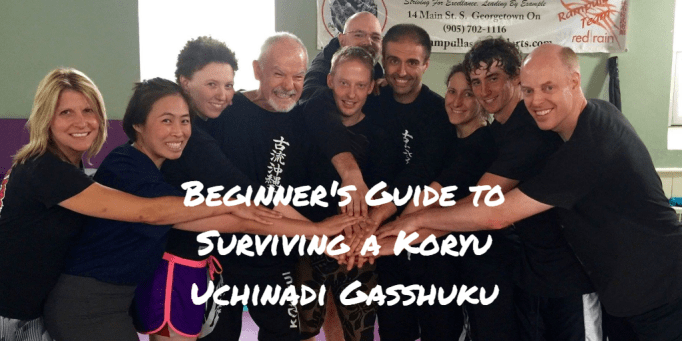
Beginner’s Guide to Surviving a Koryu Uchinadi Gasshuku

At the Koryu Uchinadi North American Gasshuku, you will experience 4 – 8 hour days of physical and mentally demanding training. It will be a whirlwind of information covering everything from throws, ground techniques, weaponry, striking, “bunkai”, 2-person flow drills, and of course kata, from some of the world’s most knowledgeable and talented martial artists.

If you’ve never attended the event before, you might not be sure what to expect and you may be a little intimidated. So, I made up a short guide to help those who are new get the most out of their training and the extracurricular activities at this year’s event.

#1 – It’s a marathon, not a sprint.

8 hour long training days over 4 days is guaranteed to take its toll on you mentally and physically, so be careful not to overdo it on the first day.

My first Gasshuku, I most certainly did and I literally had a sleeve of bruises, which affected my ability to make a fist and drink a beer for the rest of the week. . .

It was quite the ordeal, specifically the beer part.

So, don’t make the same mistake I did! Remember, it’s not about showing off, it’s about learning, so take your time and move at a pace you’re comfortable with, both for your safety and the safety of your partner.

#2 – Stay hydrated.

I suppose this should go without saying, but for those who have never trained over an extended period of time before, it’s an important reminder.

The KU Gasshuku will be strenuous, at the least. To help keep you focused and healthy throughout the event, always keep a water bottle handy and try not to overdo it at the bar.

#3 – Listen!

I’ll say it a little bit louder for the people in the back. . .

LISTEN!

I mean really listen! And, by that, I mean close your mouth and open your ears!

For many of us who attend the event, we’re professional martial artists, we’re black belts, we’re teachers and we almost always take on the teaching role. If you’re attending the Gasshuku as a participant, your job, your only job, is to learn.

The key to do that is to. . .

At the Gasshuku, this is your chance to really be a student again. And, to get the full advantage of the lessons, take on the beginner’s mind, “empty your cup” as they say, and remember that in the martial arts, you’re “always a student, sometimes a teacher”.

#4 – Remember your etiquette and your hygiene.

Anytime you attend a martial arts event for the first time, scale your etiquette towards the formal side until someone tells you otherwise. Remember to bow when entering the dojo or greeting a senior student or instructor. It’s always better to lean further towards formality and tone it down when asked than to not show enough formality and be seen as arrogant or disrespectful.

In continuity with etiquette, remember good hygiene! You are going to sweat A LOT, so please make measures to ensure you have a clean gi and fight gear. Also, remember to keep those fingernails and toenails cut short. . . You don’t want to be that guy!

. . .Or, do I?

#5 – Have Fun!

Last, but not the least, have fun! At the event, we train hard and play hard. The sweat, the tears, the hangover — it’s all in good fun. Try not to take yourself too seriously and come in with a child’s mind. Don’t worry about making mistakes; that’s a part of the learning process. We’re just here to play and explore and in doing so have a better understanding of the art we love so much: Karate.

We hope to see you there!

Haven’t registered yet? DOWNLOAD THE REGISTRATION FORM BELOW!

Friction in the Dojo: How It Can Move You Forward

Friction. . .

thomas-millot-316805-unsplash

It can be the thing that helps drive you forward. . .

It can be the thing that slows you down. . .

As yellow belts, my friend Tracy and I had a silent competition against each other.

Our Sensei told us that the only person we should compete against was ourselves.

“Os! Sensei!”

giphy1

In lip service, like so many still do, we professed to one another and our instructors that this was always our goal, to simply be better than we were the day before.

A selfish attempt to be more idyllic than the other.

When we stood next to each other in line, our eyes would always glance to the other.

Watching, sensing, checking. . .

giphy

“Is her horse stance lower than mine?”

“Did she do more push-ups than I?”

“Did the Sensei compliment her and not me?”

As these thoughts and insecurities arose in me, I later learned that she thought the same.

It was the unspoken friction that propelled us forward.

For everything she did well, I was committed to doing it. . .

better,

faster,

stronger,

than her.

And with that, Tracy would double her efforts in return.

In the presence of one another, our efforts were exponentiated. Our skill improved through the silent desire to be the best in the dojo, better than the other.

But. . .

One day, Tracy stopped attending classes. So, I was left  alone to to find another “Frienemy” to silently compete with.

As the years passed, there would be others. . .

Watching, sensing, checking. . .

Better, stronger, faster. . .

Wash, rinse, repeat. . .

giphy2

But, they would all eventually leave as well.

By the time I achieved my Shodan, there was no one left to compete with.

The Senpai above me were so far ahead, there was no competition there.

And, my students were not close enough yet to truly challenge me (although, I look forward to that day).

Without this traction, I could feel myself slowing down.

For the first time in my life, I had no one to compete with but myself.

giphy3

Where I once targeted my critical eye on those around me, I was now forced to point it at the one person I could neither defeat nor be defeated by: myself.

It was in that moment I understood what my Sensei was getting at when he said, “You should only compete with yourself.”

There is, of course, value in silently competing with those around you, as a type momentary motivation to challenge your physicality and fitness.

But, in the long run, you should define your success on your own terms. Each individual in the dojo has their own unique objectives. Sometimes people pursue martial arts for fitness, others for camaraderie, or just because they find it fascinating.

Would you want to compete against someone who is purely interested in the history of karate when your interest is biomechanics?

Of course not.

In this sense, it’s not so much about competing, but defining your unique objectives. Give yourself the recognition that you deserve. Observe the distance you’ve gone to achieve your goals. Have enough self-awareness to ask “Can I do better?” and to answer “I will do better”.

Now, when I step in line and look in the mirror, I sometimes see the gawky, awkward, teenage, yellow belt I once was and I wonder. . .

“Is her stance lower than mine?”

giphy4

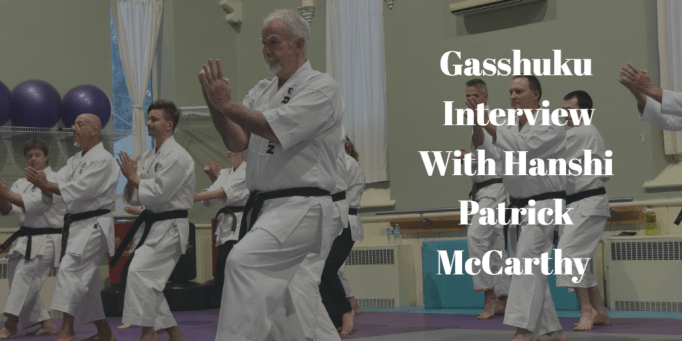
Gasshuku Interview With Hanshi Patrick McCarthy

With the 2018 Koryu Uchinadi North American Gasshuku just around the corner, I had a chance to speak with Hanshi Patrick McCarthy (9th Dan) about what the Gasshuku means to him and what we’ll be learning at this year’s event. 

JT: Can you tell me a bit about the meaning and history of the term Gasshuku?

Koryu Uchinadi Gasshuku 2002

McCarthy Sensei: Unlike the Japanese terms Keiko[稽古], which means “training,” Renshu[練習], which means “practice,” Kan-geiko[寒稽古], which means training in [cold/winter] temperature/conditions and/or Shochu-geiko[暑中稽古], which means training in [summer/hot] temperature/conditions, the term Gasshuku[合宿] means “training camp,” but also brings the idea of lodging together while conjuring up a special feeling of camaraderie and learning through austerity. This, of course, coincides exactly with our theme for the international gathering: diligent training, improved understanding and camaraderie between like-minded people supporting common goals. Unlike the open or multi-style training seminars that I often teach around the world, the focus of our symposium is to address curriculum-orientated theory and practices. The express purpose of this effort is purely to broaden and deepen your understanding of Koryu Uchinadi and tighten our bond of friendship in the spirit of Budo.

JT: Can you tell me about the first Koryu Uchinadi North American Gasshuku? What was it like?

2002 Gasshuku

McCarthy Sensei:  Oh yes, the first two things that come to mind are what a remarkable job Sensei Brian & Helen Sakamoto did in arranging the gathering and exactly just how bloody hot it was in Toronto that summer of 2002.  I also remember the special guests who came to visit: Sensei Tsuruoka, Sensei Wally Slocki and Sensei Monty Guest. In spite of the hot weather, we had such a memorable time training together and forming such unshakable bonds of friendship.

JT: What is your favourite part about the Koryu Uchinadi North American Gasshuku?

2015 Gasshuku Go KU

McCarthy Sensei:  Ahhh, that’s easy. Just the feeling I get of being around so many who share my dream and seeing how KU empowers those who embrace it.

JT: What do you plan on teaching at the 2018 Koryu Uchinadi North American Gasshuku?

12068936_979113705482798_7458521269342186251_o.jpg

McCarthy Sensei: Well, everything I teach is “Toolbox-orientated” [i.e. the ability to deploy effective practices against the HAPV] in what I refer to as Riai-Tegumi. That said, my focus of attention this year will be on the 48-Bubishi postures, how they are used against the HAPV, and their ritualization into templates, which are exampled in the Kata we embrace.

JT: Could you explain the significance of the 48-Bubishi Postures?

McCarthy Sensei: The 48 2-person postures represent classical HAPV and response applications. They are timeless and hugely significant to the original art as once taught, learned and practiced in old Okinawa.

JT: Could you explain Riai-Tegumi in a bit more detail, for those who are not familiar with this practice?

McCarthy Sensei: Riai-Tegumi[理合手組] is an unscripted/random exchange of HAPV attacks, escapes & counters [using our RRCCR/receive, respond, capture, control & release concept], with varying levels of aggressive resistance, which starts from a stand-up position after, “crossing hands,” and includes the clinch and the ground, and most preferably all three areas.

JT: If you had one piece of advice to give, what would it be?

dsc_0141

McCarthy Sensei: Don’t be afraid to believe in yourself, follow your heart and enjoy life!

Message from the Director

Sensei McCarthy

“Dear students, instructors & colleagues,

I have long been passionate about the traditional fighting arts but prefer functionality to impractical ritual. By going out on my own, and establishing Koryu UchinadiI not only challenged the existing status quo, I succeeded in ruffling many a feather within our tradition. Nowhere was this sentiment more evident than with the zealots who believe the art is the exclusive domain of the Japanese [i.e. Okinawans]. My knowledge of Japanese language and [Budo] culture, unique experience and technical competency represented the kind of progressive independence, which seemingly threatened the control and insecurity of the powers that be.

17th Century Haiku Master, Matsuo Basho, summed up tradition nicely when he wrote, “Seek not to [blindly] follow in the footsteps of the men of old but rather continue to seek out what they sought.” This timeless concept says so much about keeping tradition alive, rather than blindly adhering to, “Exactly how the master did it 75 years ago!” Citing the wisdom of Thomas Moore, “Tradition is not the worship of ashes, but the preservation of fire.” Progress is impossible without change, and those who cannot change their minds cannot change anything. The only way to do this effectively, especially in lieu of such widespread ambiguity, is the continual exploration of that which we don’t understand by using any and all means available to us. This is the guiding light of the IRKRS, and I am confident that the direction in which we are currently travelling is much more in line with the teachings left to us by the pioneers than is the conformist mentality that shaped the dysfunctional modern interpretation of this art.

pablo

Koryu Uchinadi represents the culmination of my life’s work. It is a uniquely contemporary tradition meticulously constructed from the remnants of four classical practices [Tegumi手組, Ti’gwa手小, Torite捕り手 & Kata型], once vigorously embraced during Okinawa’s old Ryukyu Kingdom Period. For many years, I dreamed of a way in which to reach out and help other people find their way through the historical, cultural and technical ambiguity, which tends to shroud understanding the essence of this art. The International Ryukyu Karate Research Society has become a worldwide movement bringing together like-minded people in pursuit of common goals. Celebrating empowerment, personal achievement and camaraderie has become the hallmark of our movement.

This Gasshuku is one of the most important annual gatherings of our organisation. To have such dedicated and like-minded people come together in camaraderie and support of common goals is nothing short of wonderful. I would also like to express my appreciation to all local participants and especially those who will travel from out-of-town, the USA and overseas. Some of the supporters here have been with us since our very first Gasshuku in 2002. I am especially grateful to Sensei Helen Sakamoto for her years of unwavering support. I’d also like to say thanks to Renshi Mike Coombes, his team, and the entire Toronto Study Group who do such a great job co-hosting our gathering. Also, a very special thanks to our co-instructors [Renshi Paul Lopresti, Renshi Cody Stewart, & Shidoin Darrin Johnson] for agreeing to deliver our target lessons this year. I am confident that you will be very happy with the experience delivered through their insightful lessons.

Welcome to our 16th annual North American Gasshuku, thank you for sharing my dream and helping to make this annual gathering such a wonderful learning experience.

Patrick McCarthy

Director

Join us for the 2018 Koryu Uchinadi North American Gasshuku!

KU_IRKRS-3

9 Stupid Reasons to Be In the Dojo. . .And, The 1 Good Reason YOU SHOULD!

Have you ever met someone in your dojo who just doesn’t get it!?

giphy8

The student (and sometimes teacher) who will do martial arts for every reason under the sun, except for the reason they should!

The reason that will give them the best results. . .

The reason that will give them the greatest satisfaction. . .

So here are some of the ignorant, the creepy and at times downright stupid “reasons” to train I’ve seen over the years from students and teacher alike, and the simple answer I have for all of them.

1) When your Mom drops you off and you don’t want to be there. . .

JUST TRAIN!

giphy9

2) When you’re trying to escape your personal problems. . .

JUST TRAIN!giphy4

3) When you want a way to flirt with the girls in the dojo behind your wife’s back. . .

That’s creepy! Stop it! JUST TRAIN!

giphy5

4) When you want to believe training will make you a Jedi. . .

Do or Do not. . . JUST TRAIN!

giphy3

5) When you  fake an injury just to get attention. . .

JUST TRAIN!

giphy1

6) When you have a crush on the Sensei. . .

Ugh. . .Grow up! JUST TRAIN!

giphy2

7) When you want to be the next Karate Kid. . .

Wax on. Wax off. JUST TRAIN!

giphy6

8) When you’re looking for a father figure. . .

Get therapy! JUST TRAIN!

giphy7

Well, maybe not therapy from him. . . 

9) When you want your next belt. . .

JUST TRAIN!

giphy

10) When you want to be a respected martial artist. . .

That seems legitimate. . .JUST TRAIN!

giphy10

“JUST TRAIN!” It’s Chuck Norris APPROVED!

When you enter the dojo, there’s only one reason and one reason only to be in that room.

So, Shut up!

JUST TRAIN!

output_upcTv5

Karate and The Sunk Cost Fallacy

The sunk cost fallacy is when you make a decision based on the desire NOT to see your past investment go to waste, rather than on the best outcome.

Nowhere else do I see this phenomenon as much as in karate.

giphy

I have listened to many karate students and teachers explain to me that they are disenchanted with their current karate practice:

“The application practices are unrealistic.”

“The body movements are mechanical.”

“The teaching style is too militarized.”

giphy2

Yet when I ask, “Why don’t you quit or switch styles?”, there is always an excuse. Sometimes, they quote loyalty to their instructor or peers.

OR

It’s just the way they’ve always done it.

Denial-san at it’s best!

giphy7

The real reasoning is they cannot bear the thought that they’ve invested their entire life for a method that is now or always has been worthless.

It’s a security blanket that is worn, tattered and useless!

giphy3

I’ve also seen long-time students make no meaningful commitment to training, but show up for the last 15 minutes of class once a month, do a kata and leave, while claiming they are still passionate about martial arts. It is obvious their interest has faded and they’d be happier somewhere else.

giphy6

Why do they continue to come to a class when they aren’t getting anything from the class mentally, physically or even socially?

They hold on by their fingernails because they fear that if they completely stop, that all those years of real commitment and work will have been a waste.

As Julia Galif explains, “whatever you have already spent is called the sunk cost. It’s gone no matter what you do going forward.”

The irony is that the desire to not see your past investment go to waste makes you waste even more time clinging to something that you no longer enjoy.

My advice is to not waste any more time pretending martial arts is something you actually want to do. Put yourself in a place you want to be, even if that means leaving the Dojo behind.

giphy5

For instructors who are disenchanted, find a methodology that truly fits the outcomes you want to achieve. It may mean biting the bullet and starting over again from the beginning, but once you realize you are on the wrong path, the only option is to correct the course you are on.

For the students who have lost interest, your time hasn’t necessarily been wasted. The benefits of pursuing the fighting arts are far and wide and the lessons you’ve learned will always be with you. Remember, it’s better to have loved and left than to have never loved at all.

giphy4

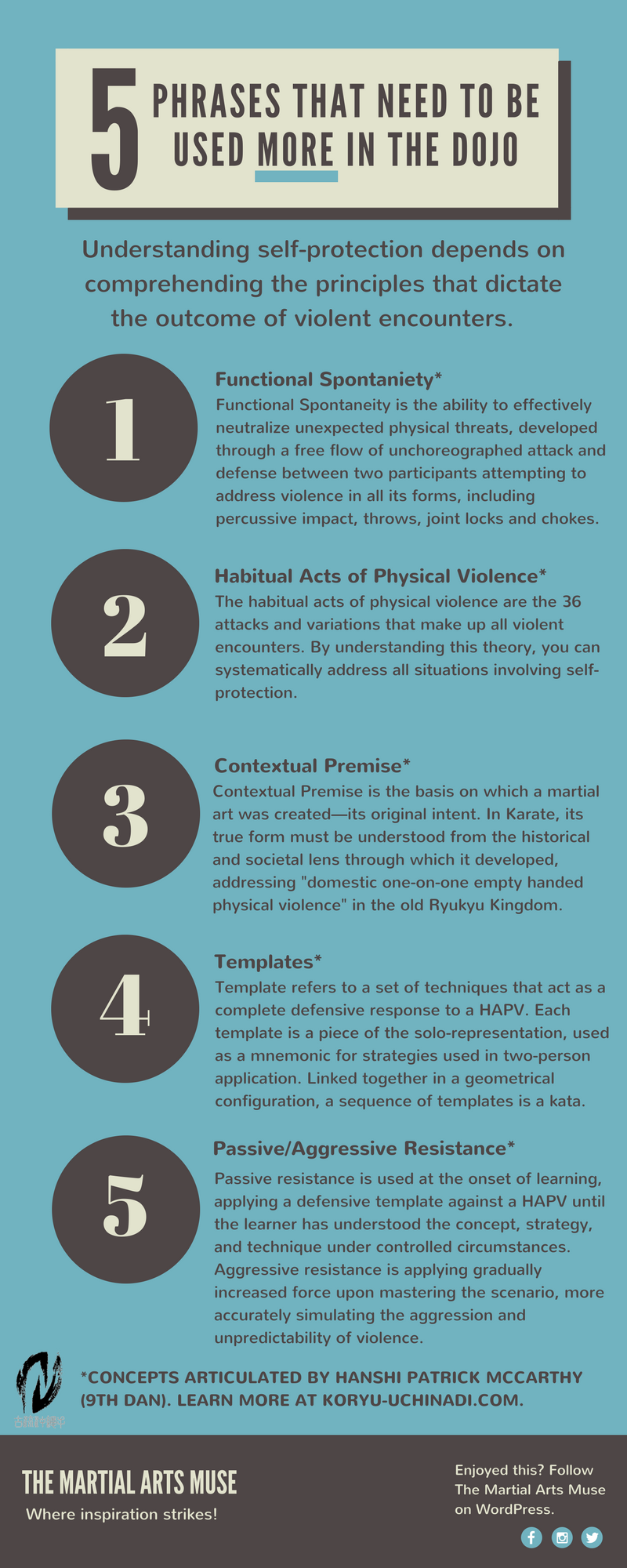
5 Phrases That Need To Be Used MORE In The Dojo

5 words that need to be used more in the Dojo-4

Enjoyed this post? Follow The Martial Arts Muse on Facebook for more Martial Arts Musings!

The Martial Arts Muse Tatami Promo

A Charmed Martial Arts Life

My mother always said I had a charmed life—not necessarily in the sense of extreme luck such as winning the lottery, but more in the sense that I’m presented with fortunate circumstances that allow me to make the best of any situation.

I feel especially charmed when it comes to people. I’ve always been fortunate to find people who seem to be willing to invest in me.

This has been extremely influential in my pursuit of the martial arts.

I know wholeheartedly that I would not be as successful in the martial arts if it weren’t for those who took the time to challenge, teach and encourage me. I value them especially because I know I am an imperfect human being. When I feel, I feel strongly, and on more than one occasion when my passion gets the best of me I’ve challenged them in return, often with great bluntness and sometimes without courtesy.

But, this is, of course, the nature of the student-teacher relationship. It is not simply an exchange of knowledge; it’s more than that.

It’s a mutual dialogue built on trust and friendship.

It’s camaraderie that helps us find our way through the twists and turns that the martial arts and life throw at us along our path.

And, very often, it is a test of wills.

With that said, I would like to take the time to recognize those who have helped me in my most recent martial arts journey: The Martial Arts Muse.

the-martial-arts-muse-10000-views

In October, The Martial Arts Muse exceeded my goal of 10,000 views within the year. I strongly believe it would not have been as successful if it weren’t for those who encouraged me to be a little bit better than I was the day before.

Hanshi Patrick McCarthy 

My Australian-based instructor is the Director of the IRKRS and head Sensei of Koryu Uchinadi. Sensei McCarthy has probably forgotten more than we will ever learn. Many of the concepts and ideas I touch on in my blogs I learned through my experience training with him and those who are a part of the IRKRS. He is the central hub through which I could find a community of like-minded individuals in which to share my point of view.

Renshi Mike Coombes

Renshi Mike Coombes is the head instructor of Hatsuun Jindo Martial Arts and a Sandan in Koryu Uchinadi. Although he might be unaware of it, many of our conversations have served as inspiration for my writing. Through our conversations, I’ve learned that the issues that I once thought unique in my own sphere are actually shared amongst others in the martial arts community. This emboldens me to continue my writing in the hopes to inspire others to overcome the challenges we sometimes face in the martial arts.

Renshi Cody Stewart

Renshi Cody Stewart is a Godan in Koryu Uchinadi and the YouTube personality of KU Quick Tips. I don’t think anyone challenges me as much as he does. It is because of this he is my favourite person to postulate theory with. I feel he adds equilibrium to my writing by asking the right questions, so I may come to my own conclusions. And he is also a savagely meticulous editor. Without his help I would certainly have much less to say with far more grammatical errors.

Josh Stewart

My dear husband, Josh is always the first and last to see my writing before I officially post it. A martial artist and writer himself—and a far better one, at that—I turn to Josh during my greatest insecurity in search of support. Whenever I ask him to read my work, he always has the right answer, “It’s good. I like it!” This is the little push I need to finally press the “Post” button and gives me the courage to expose what are sometimes intimate thoughts on the art I so very much love.

Chonin Kan and Toronto KU Study Group

My students and those I train with are my greatest muses. I feel a strong emotional investment in those I work with, both at my home dojo and in the Toronto KU study group.

As I mentioned before, when I feel, I feel deeply, because of this I feel their successes and failures, optimism and frustration concerning training as if I was experiencing it myself. They not only give me something to write about, they give me someone to write to. Many times, I’ve written blogs with specific individuals in mind. I don’t know if they’ve always read them, but like a message in a bottle, even if it doesn’t reach its intended destination, if it reaches and resonates with someone, it’s worth it.

You, the reader

I don’t know who are, but I am constantly pleasantly surprised and humbled that you chose to visit The Martial Arts Muse. I sincerely appreciate the time you take to read what I have to say. As a female martial artist, it’s not uncommon for me to experience a greater amount of questioning and interruption when expressing my opinion on the martial arts; it’s easy to feel like my voice isn’t heard or, at least, doesn’t hold the same value as if it comes from my opposing gender. The Martial Arts Muse has served as a means to overcome this and is an unimpeded way to shed light on issues that many of us are sometimes afraid to address.

I am sincerely grateful for everyone’s support this year. My life as a martial artist is truly charmed. I feel beholden to you.