The Weird Guys (and Gals) of Martial Arts (Part 1): The Bad Weirdos

Let’s be real: martial arts attracts weirdos.

Not the charming, quirky ones who collect nunchucks and dad jokes. No. I’m talking about the ones who make you question whether martial arts really is for everyone. The ones who weaponize trauma, misunderstanding, or just plain ego—and turn every training session into a cringe-inducing experience.

You’ve seen them. You’ve probably rolled or sparred with them. And if you haven’t… brace yourself. They’re coming.

1. The Arcane Alchemist

He’s not here to train—he’s here to transcend.
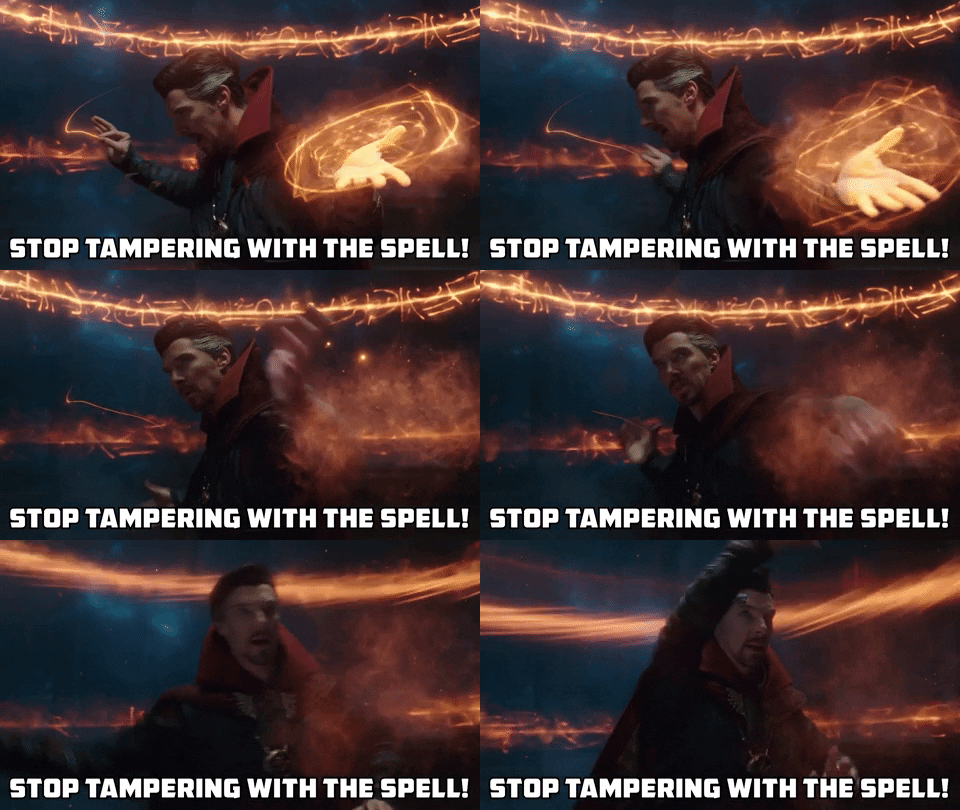
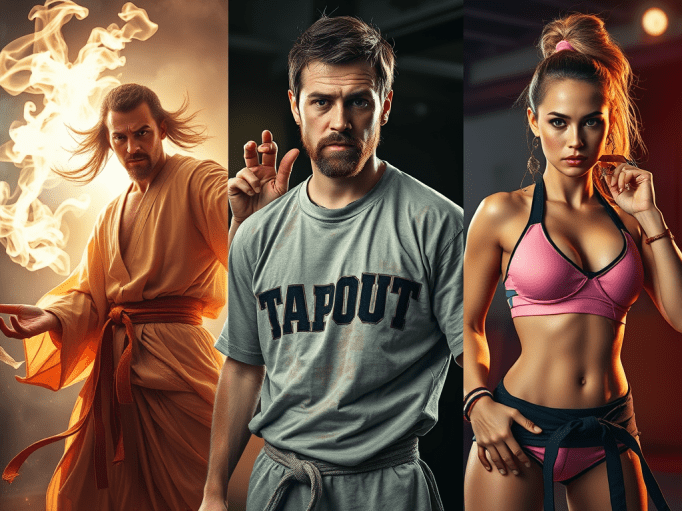
This guy believes martial arts are primarily about channelling your chi, cleansing your aura, and aligning his bone marrow to the vibrational frequency of an eagle in flight. He doesn’t spar because it disrupts his energy field. He doesn’t drill technique because it’s too “external.” He’s here to talk about meridians and internal spirals and the time he knocked out a dude using only his breath.

Ask where he learned this, and it’s always a “secret lineage” or a reclusive master in the mountains who doesn’t believe in belts. Or hygiene.

He will leave as soon as he realizes your gym isn’t a temple, and no one wants to hear about his astral projections during hip escapes.


2. Mr. “I Wanna Learn UFC”

Not MMA. Not jiu jitsu. Not striking. UFC.
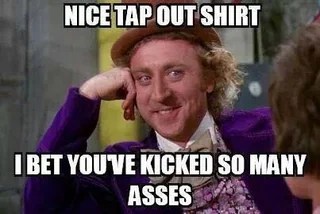
This guy watches knockouts on Instagram and thinks that’s the whole curriculum. He walks into your gym and immediately asks when you’ll be doing “cage work,” as if every community centre doubles as the UFC Apex Center. He doesn’t care about fundamentals. He just wants to jump into live sparring and “go full out.”

He’s always in a Tapout shirt from a garage sale, and his pre-workout smells like regret. You know he’s going to get armbarred, guillotined, and heel hooked within the free trial week, and when he quits, he’ll tell everyone the gym “wasn’t intense enough.”

Spoiler: It was too intense—for him.


3. The Thirsty Rash Guard Girl

Yes, women can be weird too. Equality.

She shows up to her first nogi class dressed like she’s on her way to a Coachella pool party.

Minimal clothing, maximum attention-seeking. She’s not here to train—she’s here to roll with the hottest upper belts in the room. Her triangle setups make no technical sense, but she still manages to add a bonus layer of unnecessary intimacy to an already intimate technique.

You want to be supportive, welcoming, and professional—but the vibes are weird. Real weird. She rotates through male training partners like profiles on a dating app, then disappears when she figures out they’re more into hitting the technique than hitting on her.

Her gi is always freshly washed. Her technique? Not so much.


4. The Pain Tourist

This guy doesn’t want to learn. He wants to survive a fictional prison riot.
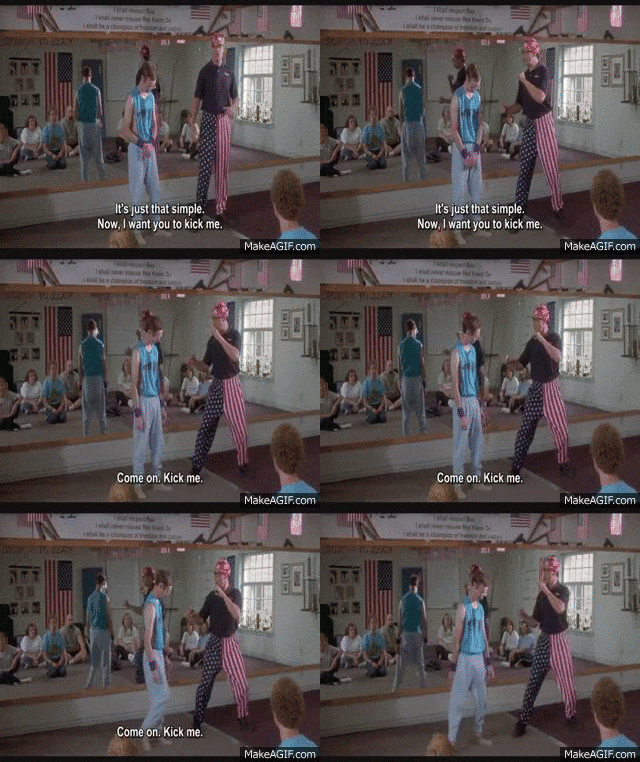
Every technique has to be “real for the street.” He’s constantly asking what you’d do if the opponent had a knife, a gun, a rabid dog, or a rabid dog weilding a gun and a knife! You’re drilling guard retention, and he’s like, “What if he bites you?” He carries himself like someone who’s preparing for a post-apocalyptic bar fight, not an inter-academy tournament.

He doesn’t trust systems or fundamentals. But he does trust his own paranoid instincts, which mostly involve flinching and trying to fish-hook people.

He’s not here to grow—he’s here to indulge his fantasy of being Jason Bourne with anger issues.


5. The Chip-on-Their-Shoulder Grappler

You can spot them before the round even starts: clenched jaw, thousand-yard stare, already sweating.

This person is not here to train. They’re here to win—at all costs. Every roll is life or death. Every partner is a proxy for their ex, their childhood bully, or whoever told them they peaked in high school. You go to flow roll, and they go full championship final. You tap them, and suddenly they’re asking for “just one more round.”

There’s always an origin story. A divorce. A workplace humiliation. A teenage trauma they never unpacked. Jiu jitsu is their therapy—and unfortunately, you are the unpaid counsellor caught in their processing loop.

To be clear, martial arts can be therapeutic. But it’s not therapy. No matter how many sweaty meme pages say otherwise.


6. The Coach Who Only Cares About the “Good” Students

This one hits different—because this person is in charge.
You notice it right away: there are favourites, and then there are invisible people. If you’re young, athletic, winning competitions, or just naturally gifted, you’re golden. The coach is watching your rolls, giving you corrections, shouting encouragement.

But if you’re older, slower, struggling with the basics, or just showing up to train consistently without fireworks? You’re background noise.

No corrections. No feedback. Just vibes. And not good ones.

What makes this extra weird is that martial arts is supposed to be for everyone. That’s the whole pitch. But some instructors treat the less “talented” students like grappling dummies—ideal to toss around, but generally ignored and left in the corner.

Meanwhile, they’re grooming their chosen few like a coach in an ’80s sports movie who peaked in college.

It’s a subtle kind of weirdness—but maybe the most corrosive of all. Because it tells people: You only matter if you win.

Spoiler: those “non-athletes”? They often end up being the toughest, most thoughtful, most dedicated students in the room. But they leave—because they know they’re not seen.


Final Thoughts

Martial arts is a magnet for misfits—and some of them are awesome. But the ones above? They’re not here to get better. They’re here to project something onto the mat: superiority, insecurity, fantasy, or trauma.

The trick is learning to spot them early, set boundaries, and focus on what you came for: growth, sweat, and maybe—just maybe—a good laugh at how weird we all are sometimes.

Next time: we talk about the good weirdos. The ones you love to have in the room, even if you can’t explain why.

Until then, keep your hands up, your mind sharp, and your vibe grounded.
Exposing the Shadows: The World of Fake Martial Arts

Martial arts have held a place of fascination for centuries, captivating individuals with tales of discipline, mastery, and honour. From the flowing movements of Tai Chi to the explosive strikes of Muay Thai, these practices are steeped in tradition and dedication. However, within this realm of authenticity, a darker underbelly exists — the domain of fake martial arts. This blog delves into the depths of fake martial arts, unravelling their origins, distinct characteristics, and the insights of Rob Ingram, the driving force behind McDojoLife.

Origins of Fake Martial Arts

The origins of fake martial arts can be traced back to a mixture of misinformation, sensationalism, and a hunger for spectacle. A parallel demand for intrigue and entertainment arose as martial arts gained worldwide popularity. This demand created a breeding ground for individuals who claimed to possess supernatural abilities through their martial arts practice. Some boasted mastery over the mysterious forces of “chi” or “ki,” performing feats that appeared almost magical, such as shattering bricks with gentle touches or levitating.

Distinguishing Characteristics

  1. Dubious Claims: At the heart of the world of fake martial arts are dubious claims that immediately raise suspicions. Practitioners often assert that their techniques are so lethal that they cannot be used in real combat situations, conveniently avoiding any empirical scrutiny. This evasion of practical application casts doubt on the authenticity of their skills.
  2. Mystical Pseudo-Science: Fake martial arts frequently rely on mystical and pseudo-scientific explanations to legitimize their extraordinary claims. Buzzwords like “energy manipulation” and “mind over matter” create an aura of mysticism that appeals to those seeking the extraordinary. In contrast, genuine martial arts emphasize rigorous training and physical conditioning.
  3. Avoiding Pressure Testing: Legitimate martial arts advocate for pressure testing and sparring as essential tools for refining skills and assessing progress. However, fake martial arts often resist any form of controlled pressure testing, using excuses like “deadly intent” or “potential harm to opponents.” This evasion only serves to deepen suspicions about their legitimacy.
  4. Veiled Techniques: Fake martial arts often boast hidden “secret techniques” accessible only to a select few after years of intense training. This air of exclusivity further separates their claims from the tangible, observable nature of authentic martial arts.

Rob Ingram’s Insights

Rob Ingram, the founder of McDojoLife, has been a leading figure in exposing fake martial arts. McDojoLife is an online platform dedicated to shedding light on martial arts fraud and deception. Ingram’s perspectives resonate deeply with the concerns surrounding fake martial arts and offer 5 rules of what makes up a McDojo:

  1. NoTouch Knockouts
  2. Pedophiles
  3. Unsafe Training / Cult Behavior
  4. Shady Business Practices
  5. Lying about Belt Rank or Fight Record

Distinguishing fake martial arts (or McDojos) from the real deal is crucial because it protects the integrity of true martial artists who have dedicated their lives to mastering their craft.

Dangers of Fake Martial Arts

  1. False Sense of Security: Placing trust in the exaggerated claims of fake martial arts can foster a false sense of security. When confronted with a genuine self-defence scenario, relying on unproven techniques can lead to disastrous consequences.
  2. Wasted Time and Effort: Committed students who invest their time, energy, and finances in pursuing fake martial arts can find themselves disillusioned when they realize their skills are ineffective. This disillusionment can take both an emotional and financial toll.
  3. Missed Opportunities: Opting for fake martial arts may prevent individuals from exploring authentic practices that offer practical skills, physical fitness, and personal growth.
  4. Tarnished Reputation: The prevalence of fake martial arts not only impacts those who fall victim to their deception but also casts doubt on the reputation of martial arts as a whole. Skepticism can extend to legitimate martial arts practices, hindering their deserved recognition.

Conclusion

In an age of rapid information dissemination, it’s imperative to exercise discernment when delving into any discipline, martial arts included. Fake martial arts and McDojos, with their tantalizing promises of supernatural abilities, pose a significant threat to the authenticity of genuine practices. By understanding the hallmarks of fake martial arts and their potential hazards, we equip ourselves to make well-informed choices.

As enthusiasts of martial arts, it’s our responsibility to uphold the values of discipline, respect, and humility that underpin authentic practices. By illuminating the shadows cast by fake martial arts, we contribute to preserving the rich traditions and invaluable life lessons that genuine martial arts offer. Let us tread the path of authenticity, dedicating ourselves to the pursuit of genuine skills, physical well-being, and personal development. Exposing fake martial arts and McDojos is about safeguarding the integrity of a beautiful and enriching discipline, ensuring it remains true to its roots.

Enjoyed this post? Check out “Are You Practicing BullSh!t Bunkai?”

Bunkai, Karate, Oyo, Kata Applications

Does Your Karate Have “Flavour”?

“It is necessary to drink alcohol and pursue other fun activities. The art [karate] of someone who is too serious has no flavour.” – Motobu Choki

I have a karate friend, sharing the sentiments of Motobu, who said, “if you can’t do a kata drunk, you can’t do it at all!”

I know of many BJJ practitioners who choose to smoke weed before training. Even while attending BJJ tournaments here in Canada, where marijuana is legal, I’ve seen dozens of practitioners smoke a joint before their matches. In the hopes to, as Eddie Bravo as said, “rely more on your instincts,” and let “your body take over. . . you don’t think about it, you just do it.”

Although I’ve never been high while training, I have taken CBD before practice and can speak to its benefits. I was far more relaxed both mentally and physically. When hitting mitts, I didn’t get gassed out as quickly, and my technique was far more on point. While grappling, I didn’t feel as anxious while being smothered in bottom positions, which allowed me to see more openings for escapes and various submissions. I also cared less about making mistakes; I took more risks that I might otherwise be afraid to take. Because of this, I found the experience generally more enjoyable. I embraced the experience of training.

One doesn’t need to do drugs or alcohol to gain these benefits. Simply, one can embrace child-like playfulness. Hence, so many speak of the importance of the beginner’s mind, shoshin, a concept from Zen Buddhism, for which I find many advocate but rarely actually practice.

I’m not necessarily trying to support alcohol or drug use in training, but there’s something to be said about the quality of someone’s practice and their relaxed nature towards their martial arts.

Rigidity does not breed creativity.

In the video below, Firas Zahabi speaks to the importance of this.

He uses Muay Thai and Russian wrestlers as an example. The Russians don’t go full out every practice; they have a type of focused play. Because they’re not too serious when practicing, their training is more explorative and allows for more consistent, quality reps.

Regarding Muay Thai practitioners, who have also been known to smoke and drink before their matches, Firas speaks about when they train with someone too serious or aggressive; they’ll view the individual as “too amateur.”

In an episode of the Ultimate Fighter, George St. Pierre introduced a French Muay Thai fighter who would get drunk before training and referred to him as a “free-thinker.”

GSP has also been known to have a glass of wine during his training camps. One of my favourite pass times on a sunny weekend afternoon is to enjoy a glass of wine while going through kata, or practicing weaponry. Not unlike having a beer at the golf course, it makes the practice more enjoyable and makes it an act of unwinding.

The underlying principle of using alcohol or drugs to facilitate practice, I think, is to allow for a flow state, which, as Firas Zahabi points out, is key to consistent and enjoyable training. So when Motobu speaks of flavour, perhaps he means that someone who is too serious has no flowwhich I think most can agree, is essential for creativity and functional spontaneity. 

Regardless of whether you choose to use alcohol or drugs or reap the benefits of integrating it into training, practicing martial arts should always be fun. Instructors who take themselves and their art too seriously tend to be less than enjoyable to train with, can be insufferably traditional and a complete bore. Do you think Motobu’s quote was directed at Funakoshi?

Martial arts like a fine wine, you don’t drink it with the purpose of finishing the glass, but to enjoy every sip. If you’re not enjoying the journey, why continue on the path?

Cheers!

Enjoyed this blog? Check out Karate and The Sunk Cost Fallacy!